Best Video & Cinema Cameras
March 2026
Video quality, dynamic range, color science, codec flexibility, and real-world value — these are the benchmarks that matter for filmmakers.
⚔️ Head to Head Battle
Sony FX3A
Best Cinema Camera Overall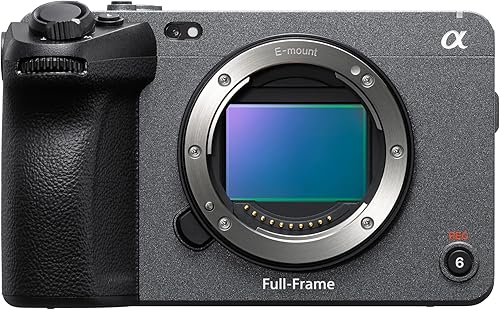
The Sony FX3A is the gold standard for compact cinema cameras in 2026. Its full-frame 12.1MP Exmor R sensor delivers 15+ stops of dynamic range and Netflix-approved image quality in a body under 720g. S-Cinetone color science produces gorgeous skin tones straight out of camera, while S-Log3 gives colorists maximum grading latitude. Active Mode IBIS makes handheld shooting remarkably smooth. AI-powered autofocus with Real-Time Eye tracking maintains critical focus even at wide apertures. Dual CFexpress Type A/SD slots, built-in cooling fan for unlimited recording, and XLR audio via the included top handle complete the package.
✅ PROS
- 15+ stop dynamic range with S-Cinetone color science
- Full-frame 4K 120fps with 10-bit 4:2:2 internal
- Active Mode IBIS for smooth handheld shooting
- Netflix-approved — production-ready out of the box
- AI autofocus with Real-Time Eye tracking
✖ CONS
- Premium price at nearly $4,000 body-only
- 12.1MP limits still photo resolution
- No internal RAW recording
- Rolling shutter in fast panning
Canon EOS C70
Best Documentary Workhorse
The Canon EOS C70 bridges mirrorless agility and full Cinema EOS capability. Its Super 35 Dual Gain Output sensor delivers 16+ stops of dynamic range by combining two separate gain readings per pixel, producing cleaner shadows and richer highlights than any competing sensor at this price. Built-in 2-10 stop motorized ND filters eliminate external filtration entirely, a critical advantage for documentary and run-and-gun work. Canon Dual Pixel CMOS AF with face and eye detection performs reliably across focal lengths, and the RF mount provides access to Canon’s expanding lens ecosystem. Dual mini-XLR audio inputs, relay recording on dual SD slots, and Canon Log 2/3 support make this a Netflix-approved production workhorse trusted by working professionals.
✅ PROS
- 16+ stops DR via Dual Gain Output sensor
- Built-in 2-10 stop ND filters
- RF mount with Canon lens ecosystem
- Dual Pixel CMOS AF with face/eye tracking
- Netflix-approved for professional productions
✖ CONS
- Heavier at 1190g, not ideal for gimbal
- Super 35 sensor, not full-frame
- No 6K or higher resolution recording
- SD card slots only, no CFexpress
Blackmagic Pocket Cinema Camera 6K G2
Best Value Cinema Camera
The BMPCC 6K G2 remains the best value cinema camera available. For just over $2,000 you get a Super 35 sensor capturing 6K at up to 50fps in 12-bit Blackmagic RAW, providing tremendous color grading latitude with manageable file sizes. Gen 5 Color Science delivers rich organic skin tones that intercut beautifully with higher-end Blackmagic cameras like the URSA and Pyxis lines. The included DaVinci Resolve Studio license (worth $295 alone) gives you a complete capture-to-delivery pipeline out of the box. The tilting 5-inch touchscreen, mini-XLR audio with phantom power, and USB-C external SSD recording round out the feature set. The Canon EF mount opens access to decades of affordable cinema and photography glass.
✅ PROS
- 12-bit Blackmagic RAW with 13 stops dynamic range
- DaVinci Resolve Studio included — complete pipeline
- 6K resolution at incredible sub-$2,200 price point
- Canon EF mount — massive affordable lens selection
- Gen 5 Color Science for cinema-grade color
✖ CONS
- No autofocus system — manual focus only
- No in-body image stabilization
- Battery life is short — external power recommended
- No built-in ND filters
Sony FX30
Best Entry Cinema Camera
The Sony FX30 democratizes cinema-quality video for aspiring filmmakers and content creators stepping up from smartphones. Its 26.1MP APS-C sensor with 6K oversampling produces stunningly detailed 4K output, while S-Cinetone and S-Log3 deliver the same color science found in Sony’s higher-end Cinema Line cameras including the FX3 and FX6. At just 562g it’s remarkably portable and shares the FX3’s cage-free body design with six mounting points. Dual Base ISO (800/2500) provides clean footage in challenging light, and Sony’s phase-detection AF with face tracking keeps subjects tack-sharp. The compact body accepts Sony’s extensive E-mount lens library, making it easy to build a versatile kit without breaking the bank.
✅ PROS
- S-Cinetone color science at under $1,800
- 6K oversampled 4K for exceptional detail
- Lightest camera on this list at just 562g
- Sony E-mount — vast lens ecosystem
- Dual Base ISO for excellent low-light flexibility
✖ CONS
- APS-C sensor — smaller than full-frame competitors
- No in-body image stabilization
- Rolling shutter noticeable with fast motion
- Limited to 4K — no 6K or higher capture
Canon EOS C50
Best Compact Cinema Camera
Canon’s newest Cinema EOS packs a remarkable 7K full-frame sensor into a body that fits in one hand. The C50 is the first in Canon’s cinema lineup to offer 3:2 Open Gate recording, giving filmmakers maximum flexibility for reframing in post — essential for multi-platform delivery across cinema, social, and broadcast. Cinema RAW Light at up to 7K 60fps in 12-bit provides extraordinary post-production latitude, while the standard XF-AVC codec handles 4K 120fps without any sensor crop. Dual-Pixel CMOS AF II borrowed from the EOS R series delivers fast, accurate autofocus rare in dedicated cinema cameras. Built-in Frame.io Camera-to-Cloud integration enables real-time remote collaboration demanded by modern productions.
✅ PROS
- 7K full-frame with 3:2 Open Gate — first in Cinema EOS
- Cinema RAW Light 12-bit up to 7K 60fps
- Dual-Pixel CMOS AF II — reliable cinema autofocus
- Frame.io Camera-to-Cloud built in
- 32MP still photo mode — true hybrid capability
✖ CONS
- No IBIS — relies on lens-based stabilization
- Brand new — limited real-world long-term feedback
- LP-E6P battery — shorter runtime than BP-A series
- No built-in ND filters
Panasonic Lumix GH7
Best Micro Four Thirds for Video
The GH7 continues Panasonic’s legacy of video-first Micro Four Thirds cameras with meaningful upgrades. Internal Apple ProRes recording, 5.7K open gate capture, and 4K 120fps slow motion put it in serious production territory usually reserved for larger-sensor cameras. The standout feature is Panasonic’s class-leading 5-axis in-body image stabilization — the best for handheld video shooting in any camera at this price point, producing gimbal-smooth results. 32-bit float audio recording via an optional XLR adapter eliminates clipping concerns entirely. The Micro Four Thirds mount provides compact, lightweight lenses perfect for travel and documentary work. Open gate 5.7K lets you capture once and deliver in any aspect ratio from 16:9 to 9:16.
✅ PROS
- Best-in-class IBIS for smooth handheld video
- Internal ProRes recording with 5.7K open gate
- 4K 120fps and 240fps FHD slow motion
- 32-bit float audio support via adapter
- Compact MFT system — small lenses, big performance
✖ CONS
- Smaller MFT sensor limits low-light and bokeh
- Phase-detect AF still trails Sony and Canon
- 5.7K maximum — behind 6K and 7K competitors
- Battery life moderate for extended shoots
Nikon ZR
Best RED RAW Cinema Camera
Nikon’s first cinema-style camera, developed in close collaboration with RED Digital Cinema, is a genuine game-changer for indie filmmakers. The ZR captures both Nikon N-RAW and RED R3D files internally — something no other camera at this price can claim. REDCODE RAW provides the same post-production flexibility used on Hollywood productions, now accessible to independent creators working on tighter budgets. The compact 540g body records full-frame 6K at up to 60fps with RED-curated picture controls for beautiful out-of-camera color. The short 16mm Z-mount flange distance enables adaptation of virtually any lens system including vintage cinema glass.
✅ PROS
- Internal R3D (RED RAW) recording — Hollywood-grade codec
- Full-frame 6K 60fps at under $3,000
- RED color science for cinematic out-of-camera look
- Incredibly light at 540g — drone and gimbal friendly
- Nikon Z mount adapts almost any lens system
✖ CONS
- No IBIS — requires external stabilization
- Limited autofocus in cinema recording modes
- New ecosystem — limited native cine lens options
- No built-in ND filters
Panasonic Lumix S1 II
Best Full-Frame Hybrid for Video
The Lumix S1 II is Panasonic’s most refined full-frame hybrid, with video capabilities that rival dedicated cinema cameras at twice the price. Open gate 6K recording captures the full sensor area for maximum reframing flexibility in post-production. The new phase-detection autofocus system finally brings Panasonic to competitive standards alongside Sony and Canon. The 5-axis IBIS is arguably the best in any full-frame body — producing gimbal-like stabilization that’s transformative for handheld shooters and solo operators. Professional monitoring tools including waveform display, vectorscope, and anamorphic desqueeze are built in. The L-mount alliance provides access to Panasonic, Sigma, and Leica glass.
✅ PROS
- Industry-leading 5-axis IBIS — gimbal-like handheld
- Open gate 6K with professional monitoring tools
- Phase-detect AF finally competitive with rivals
- L-Mount — access to Panasonic, Sigma, Leica lenses
- Excellent value for full-frame cinema hybrid
✖ CONS
- Autofocus still slightly behind Sony and Canon
- No internal RAW recording
- Heavier body at 820g compared to Sony alternatives
- L-Mount lens selection smaller than E or RF mount
Blackmagic Cinema Camera 6K
Best Full-Frame Blackmagic
Blackmagic’s first full-frame cinema camera at this price point delivers large-sensor cinematic imagery in a robust, purpose-built body designed for professional workflows. The 6K full-frame sensor produces beautiful depth-of-field separation and impressive low-light performance that the smaller Super 35 Pocket cameras cannot match. Built-in motorized ND filters (2-6 stops) are a major workflow advantage for outdoor shooting without external accessories. The 5-inch HDR touchscreen is bright enough for outdoor monitoring, and the larger body accommodates NP-F type batteries for extended shooting sessions. Gen 5 Color Science and 12-bit BRAW maintain the exceptional color rendition Blackmagic is known for. DaVinci Resolve Studio is included.
✅ PROS
- Full-frame sensor at remarkable sub-$2,600 price
- Built-in ND filters — critical for outdoor cinema
- 12-bit BRAW with DaVinci Resolve Studio included
- Bright 5-inch HDR touchscreen for outdoor monitoring
- Gen 5 Color Science — cinema-grade organic color
✖ CONS
- No autofocus — fully manual focus only
- 36fps maximum at 6K — no high frame rate at full res
- Heavier at 1080g — less portable than competitors
- Limited slow motion compared to Sony/Canon options
Blackmagic Pyxis 6K
Most Versatile Modular Cinema Camera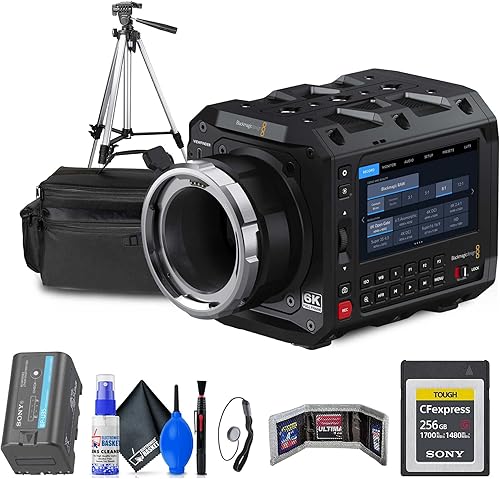
The Pyxis 6K takes the proven full-frame sensor from the Blackmagic Cinema Camera 6K and places it in a modular box-style body that can be configured for virtually any production scenario imaginable. The compact cube design mounts easily on drones, gimbals, cranes, car rigs, or traditional studio setups — making it the most versatile camera in Blackmagic’s lineup. Available in L-mount, Canon EF, or PL mount versions, it adapts to whatever lens ecosystem your production demands. Full-size SDI and HDMI outputs enable professional monitoring chains. CNC machined aerospace aluminum construction ensures durability on demanding sets. DaVinci Resolve Studio is included in the box.
✅ PROS
- Modular box design — mounts on anything
- Full-frame 6K with 12-bit BRAW recording
- Three mount options: L-Mount, EF, or PL
- CNC aerospace aluminum — extremely durable build
- DaVinci Resolve Studio included
✖ CONS
- No autofocus — manual focus only
- No built-in ND filters (unlike Cinema Camera 6K)
- No IBIS — requires external stabilization
- 36fps max at 6K — limited slow motion
How We Ranked the Best Video Cameras of 2026
Every ranking on TheShoposaurus starts with extensive research: we evaluate dozens of expert reviews and lab tests, verify manufacturer specifications against official sources, and weigh thousands of verified owner experiences to find the best video cameras for real-world use. Products are scored on video quality, autofocus, audio options, overheating limits, and value.
- Best video cameras — Best Cinema Camera Overall: Sony FX3A
- Best video cameras — Best Documentary Workhorse: Canon EOS C70
- Best video cameras — Best Value Cinema Camera: Blackmagic Pocket Cinema Camera 6K G2
- Best video cameras — Best Entry Cinema Camera: Sony FX30
- Best video cameras — Best Compact Cinema Camera: Canon EOS C50
What is the best video camera in 2026?
The best video cameras deliver sharp 4K or 6K footage, wide dynamic range, reliable autofocus, and clean audio inputs. Mirrorless hybrids cover most creators, while dedicated cinema cameras from Sony, Canon, and Blackmagic lead for professional productions that need long record times and high-bitrate or RAW recording.
What is the difference between a cinema camera and a mirrorless camera?
A cinema camera is purpose-built for video: unlimited recording without overheating, high-bitrate and RAW codecs, built-in ND filters, XLR audio inputs, and rigging points. A mirrorless hybrid shoots excellent video and stills in a smaller body but has recording limits and fewer pro video features. Choose a cinema camera for serious productions and a hybrid for versatile everyday shooting.
Do you need a cinema camera for professional video?
Not always. Modern mirrorless hybrids shoot footage good enough for commercials, YouTube, and even Netflix-approved productions at far lower cost. A dedicated cinema camera earns its price on demanding sets that need long record times, RAW workflows, built-in NDs, and pro audio and monitoring.
What specs matter most in a video camera?
Prioritize 4K or 6K at up to 60fps, wide dynamic range, reliable autofocus with subject tracking, in-body or lens stabilization, a microphone input and ideally a headphone jack, and good heat management for long clips. Log or 10-bit color recording matters if you plan to color grade.
How much do video and cinema cameras cost?
Capable mirrorless video cameras run $1,000–$2,500, entry cinema cameras like the Blackmagic Pocket line start around $1,000–$2,000, and mid-range Sony FX and Canon Cinema EOS bodies run $2,500–$6,000. Budget for lenses, media, and batteries, which add significantly to a video setup’s total cost.