Best Point-and-Shoot & Compact Cameras
March 2026
From the Fujifilm X100VI cult classic to pocketable Ricoh GR street shooters — sensor quality, lens sharpness, portability, zoom range, and image quality straight out of camera scored across the top 10 compact cameras for travel, street photography, and as a daily-carry alternative to your phone.
⚔️ Head to Head Battle
Fujifilm X100VI
Best Compact Camera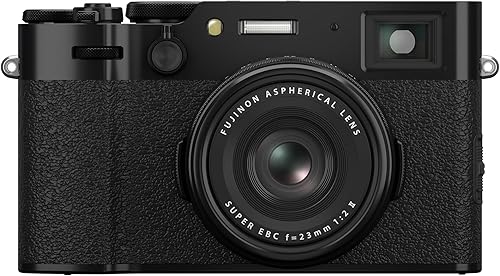
The X100VI is the compact camera that launched a thousand waitlists — and for good reason. Its 40MP APS-C X-Trans 5 sensor delivers image quality rivaling mirrorless cameras costing twice as much, with files rich in detail and dynamic range that hold up beautifully in large prints. Twenty built-in Film Simulation modes produce JPEGs so stunning that many photographers never open a RAW file. The hybrid optical/electronic viewfinder remains unique to the X100 series — flip between seeing the world with your naked eye and a live digital preview at the flick of a lever. Six stops of in-body stabilization keep everything sharp in low light without a tripod. Supply remains constrained, but it’s the best compact camera you can buy.
✅ PROS
- 40MP APS-C image quality in a compact body
- Film simulations produce stunning JPEGs
- Hybrid OVF/EVF is unique and brilliant
- 6-stop IBIS for handheld low-light
- The most emotionally satisfying camera to shoot
✖ CONS
- ~$1,599 and supply remains constrained
- Fixed 35mm — no zoom flexibility
- 40MP files are large for a compact
- AF can hunt in low light
- Battery life is modest (~310 shots)
Ricoh GR IV
Best Pocketable Camera
The Ricoh GR IV is a ground-up redesign of the legendary pocket street camera and the biggest GR upgrade in over a decade. The new back-illuminated APS-C sensor captures 25.7 megapixels with noticeably improved high-ISO performance, while the redesigned 28mm f/2.8 lens is sharper corner-to-corner than any previous GR optic. Six-stop five-axis stabilization is transformative — previous models topped out at three stops, making this version dramatically more capable in low light. At just 262 grams it genuinely disappears into a jeans pocket, yet delivers image quality that embarrasses cameras twice its size. The 0.6-second startup is the fastest in GR history, and 53GB of internal storage means you can shoot thousands of frames without a memory card.
✅ PROS
- Truly pocketable at just 262g
- New BSI sensor with excellent high-ISO
- Redesigned 28mm lens is sharper than ever
- 6-stop stabilization is a massive upgrade
- 53GB internal storage + 0.6s startup
✖ CONS
- No viewfinder — screen only
- Fixed 28mm limits versatility
- Video limited to Full HD only
- No weather sealing
- ~$1,499 is premium for a fixed-lens compact
Sony RX100 VII
Best Zoom Compact
The Sony RX100 VII remains the uncontested king of zoom compacts six years after launch, and nothing else matches its combination of reach, speed, and pocketability. The 24-200mm Zeiss zoom covers everything from sweeping architecture to distant wildlife in a body that slips into a jacket pocket. Sony borrowed the autofocus system from its flagship Alpha cameras — 357 phase-detection points with real-time tracking and eye AF that locks onto subjects with startling precision. The 20fps burst with full AF tracking means this tiny camera can capture action that would challenge much larger mirrorless bodies. A pop-up OLED viewfinder is invaluable for composing in bright sunlight. The 1-inch sensor can’t match APS-C in low light, but the zoom versatility at this size is simply unmatched.
✅ PROS
- 24-200mm zoom in a pocket camera
- 20fps burst with real-time AF tracking
- Pop-up EVF for bright conditions
- 4K video with real-time eye AF
- 1” sensor delivers quality above phones
✖ CONS
- ~$1,299 for a 2019 design is steep
- 1” sensor limits low-light vs APS-C
- f/4.5 at 200mm is slow
- Battery life ~260 shots
- Small body means cramped controls
Canon PowerShot V1
Best Video Compact
Canon’s long-awaited return to premium compacts is a purpose-built video powerhouse — a genuine Sony ZV killer. The 1.4-inch sensor is physically larger than the 1-inch chips in most compacts, delivering better dynamic range and cleaner high-ISO footage. The ultra-wide 16-50mm zoom is engineered specifically for vlogging, covering the self-filming focal lengths creators need most. A built-in cooling fan enables virtually unlimited 4K recording where competitors overheat after 30 minutes. Canon’s Dual Pixel CMOS AF from the EOS R series provides smooth, confident focus tracking. C-Log 3 with 10-bit color depth gives professional editors room to color grade, and the vari-angle touchscreen flips fully forward for selfie framing.
✅ PROS
- Larger 1.4” sensor than most compacts
- Ultra-wide 16-50mm great for vlogging
- Dual Pixel AF from Canon EOS R system
- Built-in cooling for unlimited 4K recording
- C-Log 3 for professional color grading
✖ CONS
- Video-first design limits photography use
- No EVF or built-in flash
- Heavier than pocket compacts at 426g
- 16mm wide end has limited stills appeal
- Not weather sealed
Leica Q3
Best Luxury Compact
The Leica Q3 is the compact camera for photographers who refuse to compromise on rendering quality. Its 60.3-megapixel full-frame sensor sits behind the legendary Summilux 28mm f/1.7 — an optic that produces the distinctive “Leica look”: rich micro-contrast, smooth tonal transitions, and a three-dimensional quality that flat digital images rarely achieve. Digital crop modes at 35mm, 50mm, and 75mm give you four focal lengths from a single fixed lens, each maintaining enough resolution for professional use. The 5.76-million-dot OLED viewfinder is among the finest in any camera. At ~$5,995 it is a significant investment, but every component — from the machined aluminum body to the tactile aperture ring — reflects a century of optical engineering.
✅ PROS
- 60.3MP full-frame in a compact body
- Summilux 28mm f/1.7 is extraordinary
- The “Leica look” rendering is tangible
- 8K video and digital crop modes
- Build quality and materials are unmatched
✖ CONS
- $5,995 is extreme pricing
- Fixed 28mm limits versatility
- 743g is not truly pocketable
- Leica premium is significant
- AF is good but not Sony/Canon level
Ricoh GR IIIx
Best Street Camera
The GR IIIx remains a street photography icon even after its successor’s arrival. Its 40mm equivalent perspective is the key reason many photographers still prefer it over the wider GR IV — the tighter field of view isolates subjects and creates more intimate compositions ideal for portraits and candid travel moments. The 24.2MP APS-C sensor delivers excellent image quality with sharp detail and wide dynamic range. Snap focus mode remains legendary: pre-set a distance, press the shutter, and the camera fires instantly without hunting, capturing decisive moments before subjects react. The Positive Film color mode produces punchy, contrasty JPEGs straight from camera. Now available at roughly $500 less than the GR IV, it represents exceptional value for photographers who know their preferred focal length.
✅ PROS
- 262g — truly pocketable APS-C camera
- 40mm equivalent is ideal for portraits
- Snap focus captures instant moments
- Positive Film mode produces gorgeous JPEGs
- ~$999 is excellent value vs GR IV
✖ CONS
- Superseded by GR IV with better sensor
- Only 3-stop SR vs GR IV’s 6-stop
- No viewfinder — screen only
- Battery life is poor (~200 shots)
- No weather sealing
Sony ZV-1 II
Best Vlog Travel Camera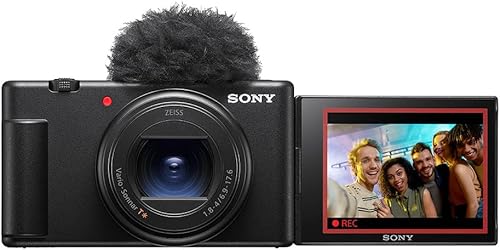
The ZV-1 II upgraded to a wider 18-50mm zoom that transformed this Sony compact from a one-trick vlogger into a genuinely versatile travel companion. The 18mm wide end captures more surroundings for establishing shots, while 50mm provides enough reach for portraits and food photography. Background Defocus creates cinematic bokeh with a single button press, and Product Showcase mode intelligently shifts focus to items you hold up to the camera. Sony’s S-Cinetone color science makes skin tones look naturally warm and professional without post-processing. The directional three-capsule microphone captures cleaner audio than any competitor in this class. For travelers splitting time between photography and content creation, it strikes the best balance of both worlds under $900.
✅ PROS
- 18-50mm zoom adds great versatility
- Background Defocus creates cinematic bokeh
- Product Showcase mode for review creators
- S-Cinetone makes skin tones professional
- Flip-out screen for selfie video
✖ CONS
- 4K 30fps only — no 4K 60
- No viewfinder
- Battery life ~290 shots
- Overheats during extended 4K recording
- 1” sensor limits low-light performance
Leica D-Lux 8
Best Premium Zoom Compact
The D-Lux 8 pairs a Micro Four Thirds sensor — physically larger than the 1-inch chips in most premium compacts — with a fast 24-75mm f/1.7-2.8 Leica Summilux zoom. That f/1.7 maximum aperture is the fastest on any zoom compact, enabling beautiful background separation and confident low-light shooting without pushing ISO into noisy territory. The manual aperture ring clicks with satisfying precision, and the rear shutter speed dial gives photographers direct, tactile control that touchscreens cannot replicate. A built-in electronic viewfinder with 2.76 million dots provides clear, accurate preview even in harsh sunlight. The multi-aspect sensor captures natively in 4:3, 3:2, and 16:9 without cropping. It’s the thinking photographer’s compact.
✅ PROS
- MFT sensor is larger than most compacts
- f/1.7 is fastest zoom compact aperture
- Leica Summilux optics are razor sharp
- Manual controls for photographers
- Built-in EVF for bright conditions
✖ CONS
- 17MP is low resolution for 2026
- ~400g heavier than pocket compacts
- 4K 30fps only
- MFT sensor still below APS-C
- $1,395 is steep for the specs
Canon PowerShot G7 X Mark III
Best YouTube Starter
Canon’s G7 X Mark III has been the default creator starter camera for over five years, and its continued dominance on best-seller charts proves the formula still works. The fast 24-100mm f/1.8-2.8 lens outperforms many newer compacts in low light — that f/1.8 wide-open aperture gathers significantly more light than the f/2.8 maximum found on most rivals. The flip-up touchscreen enables easy selfie framing, while built-in YouTube Live streaming remains unique to this camera in the compact class. Canon’s proven color science produces pleasing, ready-to-share images with minimal effort. At ~$749 it is the most affordable premium compact from any major brand, making it an ideal entry point for creators who want a meaningful step up from smartphone quality.
✅ PROS
- YouTube Live streaming built-in
- 24-100mm f/1.8-2.8 is very fast
- Flip screen for selfie video
- Excellent Canon auto mode
- $749 is most affordable premium compact
✖ CONS
- 2019 design is aging significantly
- 4K 30fps only
- Battery life ~235 shots
- No viewfinder
- Overheats during extended recording
Panasonic Lumix ZS99
Best Travel Zoom
The Lumix ZS99 packs a staggering 30x optical zoom into a genuinely pocketable body, covering 24-720mm — a focal range no other camera this size can match. That reach lets you photograph sweeping landscapes at the wide end and then zoom in to capture a bird on a distant branch or architectural details atop a skyscraper, all without extra lenses or gear. Five-axis Hybrid O.I.S. stabilization keeps images sharp even at the extreme telephoto end where shake is magnified. At ~$549 it is the most affordable camera on this list by a wide margin. The tilting touchscreen makes it easy to frame from any angle, and USB-C charging means you can top off from any portable charger. Image quality drops at the long end, but for sunny vacation shooting the zoom flexibility is unmatched.
✅ PROS
- 24-720mm zoom in a pocketable body
- 30x optical zoom crushes any phone
- 5-axis stabilization for handheld shots
- $549 is most affordable on this list
- USB-C charging and lightweight at 320g
✖ CONS
- 1/2.3” sensor — low-light suffers
- No EVF (removed from predecessor)
- f/6.4 at 720mm is very slow
- Image quality drops at telephoto end
- Small sensor limits dynamic range
How We Ranked the Best Compact & Point-and-Shoot Cameras of 2026
Every ranking on TheShoposaurus starts with extensive research: we evaluate dozens of expert reviews and lab tests, verify manufacturer specifications against official sources, and weigh thousands of verified owner experiences to find the best point-and-shoot cameras for real-world use. Products are scored on image quality, portability, zoom range, ease of use, and value.
- Best point-and-shoot cameras — Best Compact Camera: Fujifilm X100VI
- Best point-and-shoot cameras — Best Pocketable Camera: Ricoh GR IV
- Best point-and-shoot cameras — Best Zoom Compact: Sony RX100 VII
- Best point-and-shoot cameras — Best Video Compact: Canon PowerShot V1
- Best point-and-shoot cameras — Best Luxury Compact: Leica Q3
What is the best point-and-shoot camera in 2026?
The best point-and-shoot cameras pack a larger-than-phone sensor, a sharp zoom lens, and pocketable size for people who want better photos without carrying a full kit. Premium compacts with 1-inch or APS-C sensors deliver image quality a phone cannot match, while everyday models focus on long zoom range and simplicity.
Are point-and-shoot cameras still worth it?
Yes, for the right buyer. A quality point-and-shoot beats a phone in zoom reach, low light, and image quality, and it separates photography from your phone’s distractions — which is why premium compacts have surged in popularity. If you only shoot in bright light at arm’s length a phone may be enough, but for travel, events, and creative shooting a good compact is very much worth it.
Is a point-and-shoot camera better than a phone?
In several ways, yes. A point-and-shoot has a larger sensor and a real optical zoom, so it delivers cleaner low-light shots, genuine background blur, and far better reach than a phone’s digital zoom. Phones win on convenience and instant sharing, so the best compact is one that clearly out-shoots your phone where it matters to you — usually zoom and low light.
What is the best compact camera for travel?
The best travel compacts balance pocketable size, a versatile zoom (roughly 24–200mm equivalent), a sensor larger than a phone’s, and strong battery life. A 1-inch-sensor zoom compact is the sweet spot — small enough for a jacket pocket yet capable of sharp landscapes, portraits, and distant subjects on a single trip.
How much should you spend on a point-and-shoot camera?
Basic point-and-shoots start around $150–$300, but the ones genuinely worth buying over a phone — with a 1-inch or larger sensor — run $600–$1,300. Below about $500 you are often better off using your phone; the extra spend on a larger sensor is what buys the image-quality jump.