Best Cameras for Photography
March 2026
From the 45MP Canon EOS R5 Mark II flagship to budget mirrorless bodies — sensor resolution, dynamic range, color science, autofocus accuracy, and lens ecosystem scored across the top 10 cameras for landscape, portrait, and studio photography.
⚔️ Head to Head Battle
Canon EOS R5 Mark II
Best Overall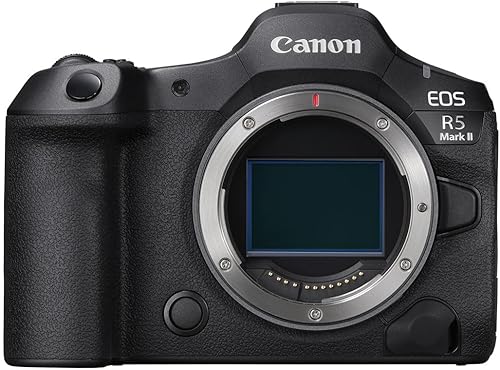
The Canon EOS R5 Mark II is the consensus top pick for still photography in 2026, earning top marks from , Digital Camera World, and Amateur Photographer alike. Its 45MP stacked back-illuminated sensor eliminates rolling shutter while delivering over 15 stops of dynamic range — enough to recover detail in the deepest shadows and brightest highlights of any scene. Dual Pixel CMOS AF II tracks eyes, animals, vehicles, and trains with remarkable precision, while Eye Control AF lets you select your focus point just by looking at it through the 5.76M-dot OLED viewfinder. At 30fps with full AF/AE tracking and pre-capture that saves frames before you press the shutter, fast-moving subjects are never missed. The 8.5-stop IBIS keeps handheld shots tack-sharp even at slow shutter speeds, and Canon’s color science continues to deliver skin tones that look beautiful straight from camera — a critical advantage for portrait and wedding photographers.
✅ PROS
- 45MP stacked sensor with zero rolling shutter and 15+ stops dynamic range
- Eye Control AF selects focus points by looking through the viewfinder
- 30fps burst with full AF/AE tracking and pre-capture
- 8.5-stop IBIS keeps images sharp handheld at slow shutter speeds
- Canon color science delivers beautiful skin tones straight from camera
✖ CONS
- $4,299 body-only price is a significant investment
- RF lens ecosystem remains more expensive than Sony E-mount
- CFexpress Type B cards required for full-speed burst shooting
- Large 45MP RAW files demand fast cards and ample storage
- Menu system complexity has a learning curve for newcomers
Sony A7R V
Best Resolution
When every pixel matters, the Sony A7R V delivers detail that borders on medium format territory — at a fraction of the size and cost. The 61MP back-illuminated Exmor R sensor produces files with jaw-dropping resolution, allowing landscape photographers to crop aggressively while maintaining print-quality sharpness, and commercial shooters to zoom to 200% on fabric textures without breaking a sweat. A dedicated AI processing unit powers the autofocus system, tracking humans, animals, birds, insects, and vehicles with remarkable intelligence across 693 phase-detect points. Pixel Shift Multi Shooting combines up to 16 exposures for a staggering 240.8MP composite image with enhanced color accuracy and zero moiré — ideal for architecture and product photography. The 9.44M-dot OLED EVF is the sharpest viewfinder available on any camera today, and 8-stop 5-axis IBIS enables handheld shooting at shutter speeds that would require a tripod on lesser bodies. For landscape, fine art, and commercial photographers who demand maximum resolving power, nothing else comes close.
✅ PROS
- 61MP delivers unmatched detail for large prints and commercial work
- 9.44M-dot EVF is the sharpest viewfinder on any camera
- AI autofocus with dedicated processor tracks subjects intelligently
- 8-stop IBIS enables handheld landscapes at slow shutter speeds
- Pixel Shift produces 240.8MP composite images
✖ CONS
- 61MP files are enormous — demands fast cards and processing power
- 10fps burst is slower than stacked-sensor competitors
- High-ISO noise visible earlier above ISO 6400
- Menu system still has a steep learning curve
- Battery life shorter due to high-resolution sensor demands
Sony A7V
Best All-Around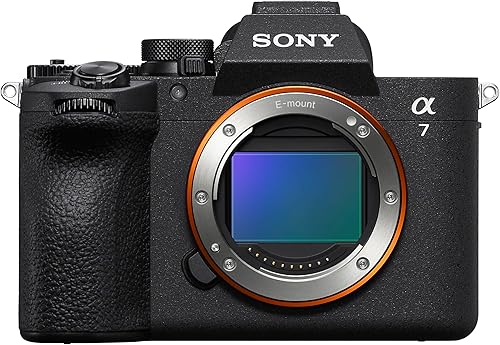
The Sony A7V is the best-selling camera of early 2026 for good reason — it hits the sweet spot that most photographers actually need. The new 33MP partially stacked Exmor RS sensor provides two full stops more dynamic range than the A7 IV it replaces, blackout-free 30fps bursts with full AF/AE tracking, and a fast readout that virtually eliminates rolling shutter. AI-powered autofocus covers 759 phase-detect points across 94% of the frame, tracking subjects with eerie precision even in near-darkness. The 7.5-stop 5-axis IBIS keeps everything sharp without a tripod, and pre-capture saves a buffer of frames from before you press the shutter. At 33MP, file sizes balance meaningful resolution for cropping with clean high-ISO performance up to ISO 12,800 and beyond — the Goldilocks zone for event, portrait, travel, and documentary photographers. The massive Sony E-mount ecosystem offers over 300 native lenses from Sony, Sigma, Tamron, and others, giving you more glass options than any competing system.
✅ PROS
- 33MP partially stacked sensor delivers 16 stops of dynamic range
- 30fps blackout-free burst with full AF/AE and pre-capture
- AI autofocus tracks reliably in any light condition
- Sony E-mount has the largest native lens ecosystem (300+ lenses)
- $2,899 is competitive for stacked-sensor performance
✖ CONS
- EVF resolution (3.69M) modest compared to higher-end models
- Color science trails Canon for out-of-camera skin tones
- No Eye Control AF like Canon R5 II
- Menu system redesigned but not as intuitive as competitors
- CFexpress Type A cards smaller and pricier than Type B
Canon EOS R6 Mark III
Best Sweet Spot
The Canon EOS R6 Mark III finally moves beyond the speed-only identity of earlier R6 models, delivering a camera that balances resolution, burst performance, and ergonomics better than almost anything in its price class. At 32.5MP — a 34% resolution increase over the Mark II — you gain meaningful cropping headroom and large-print capability without turning the camera into a slow, storage-hungry high-megapixel body. The 40fps electronic burst with 20 frames of pre-capture means the decisive moment is never missed, even with unpredictable subjects. Register People Priority lets you photograph a specific person in a crowded scene by registering their face in-camera — invaluable for event and wedding photographers. Canon’s 8.5-stop IBIS is class-leading across all manufacturers, the Dual Pixel CMOS AF II system works in near-total darkness, and the dual-slot configuration (CFexpress Type B + SD UHS-II) provides professional reliability. Canon color science continues to produce skin tones and rich colors that clients notice without knowing why.
✅ PROS
- 32.5MP hits the resolution sweet spot — detail + speed + manageable files
- 40fps burst with 20 frames of pre-capture for fast subjects
- Register People Priority focuses on a specific face in crowds
- 8.5-stop IBIS is class-leading for handheld shooting
- Canon color science produces beautiful skin tones
✖ CONS
- Not a stacked sensor — more rolling shutter than R5 II or A7V
- RF lens ecosystem more expensive than Sony or Nikon
- $2,799 is a notable increase over the R6 Mark II
- Only one CFexpress slot (second is SD)
- No mechanical shutter speed above 1/8000s
Nikon Z8
Best Pro Value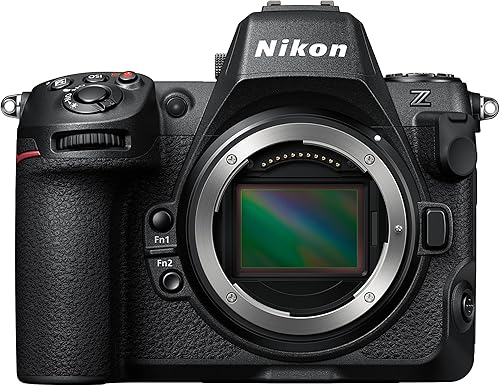
The Nikon Z8 puts flagship Z9 technology into a smaller, lighter, review-desc”>,500-cheaper body. Its 45.7MP stacked sensor delivers stunning resolution with 20fps burst and virtually zero rolling shutter. Subject-detection AF tracks nine types with flagship intelligence. Nikon color science produces rich, accurate files that edit beautifully. Dual CFexpress B slots provide professional reliability, and the magnesium alloy body with weather sealing inspires confidence in any conditions.
✅ PROS
- Z9 flagship sensor and AF in a smaller, lighter body
- 45.7MP stacked sensor with zero rolling shutter
- $1,500 less than Z9 — best pro-value proposition
- Nikon color science is rich and edits beautifully
- Dual CFexpress B slots for professional backup reliability
✖ CONS
- 910g body is notably heavier than Canon R5 II or Sony A7V
- 6-stop IBIS behind Canon 8.5 and Sony 7.5
- EVF resolution (3.69M) lags behind Sony A7R V
- Z-mount native lens selection still growing
- No built-in vertical grip
Fujifilm GFX 100S II
Best Medium Format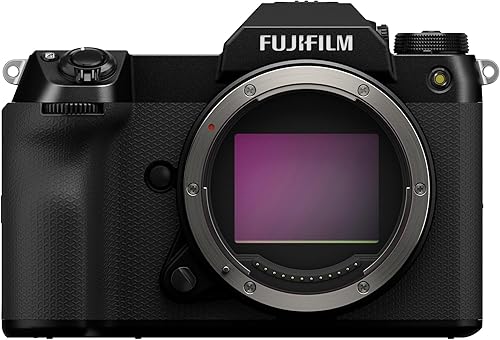
Medium format image quality at a size and price that was unthinkable five years ago. The Fujifilm GFX 100S II packs a 102MP sensor that is 1.7x larger than full-frame into a body roughly the size of a full-frame DSLR, weighing just 883g. The difference in tonal gradation, color depth, and three-dimensional subject rendering is visible in every image — transitions between highlights and shadows are smoother, colors have a richness that full-frame sensors simply cannot replicate, and subjects seem to separate from their backgrounds with a depth that goes beyond shallow depth-of-field. The X-Processor 5 engine enables 7fps burst with AI-assisted subject tracking effective down to -5.5EV, and the 8-stop 5-axis IBIS makes handheld medium format shooting practical for the first time. Twenty Film Simulation modes — including the latest REALA ACE — deliver stunning in-camera color that reflects Fujifilm’s 90 years of color science expertise. For studio, landscape, fashion, and fine art photographers who demand the absolute best image quality available, this is the only answer under $5,000.
✅ PROS
- 102MP medium format delivers tonal depth no full-frame can match
- Sensor 1.7x larger than FF — visible in color and 3D rendering
- Compact for medium format — only 883g body
- 20 Film Simulation modes including REALA ACE
- 8-stop IBIS enables handheld medium format
✖ CONS
- $4,999 before expensive GF lenses ($1,000–$3,000+)
- 7fps burst is slow for action or moving subjects
- Autofocus noticeably behind full-frame mirrorless leaders
- High-ISO performance limited above ISO 6400
- Video is basic — 4K 30p max
Nikon Z6 III
Best Mid-Range
The Nikon Z6 III proves you do not need to spend $4,000+ to get partially stacked sensor performance. Its unique 24.5MP sensor significantly reduces rolling shutter while enabling fast readout speeds that were previously reserved for flagship bodies, and the EXPEED 7 processor drives subject-detection autofocus that comes remarkably close to Z8/Z9 performance across nine subject types. The top LCD panel — borrowed from higher-end Nikon models — provides at-a-glance settings information without powering the rear screen, and the 5.76M-dot OLED EVF is a premium feature at this price point. Nikon’s color science produces files with rich, natural tones that edit beautifully in any RAW processor, and the 8-stop 5-axis IBIS ties with the best in class. Internal 6K RAW video recording and N-Log support also make this a capable hybrid. For photographers who want professional-grade autofocus, excellent image quality, and refined ergonomics without paying flagship prices, the Z6 III is the closest you will get to a Z8 without the Z8 cost.
✅ PROS
- Partially stacked sensor reduces rolling shutter at mid-range price
- Subject-detection AF approaches Z8/Z9 flagship levels
- 5.76M-dot EVF and top LCD give it a premium feel
- 8-stop IBIS ties with the best in class
- Nikon color science produces rich, natural files
✖ CONS
- 24.5MP limits cropping headroom vs 33MP+ rivals
- Read noise slightly higher in deep shadow recovery
- Z-mount third-party options fewer than Sony E-mount
- CFexpress + microSD combo is unconventional
- Battery ~340 shots — shorter than most competitors
Fujifilm X-T5
Best APS-C
The Fujifilm X-T5 proves you don’t need full-frame for exceptional stills. The 40MP X-Trans 5 sensor resolves detail rivaling many full-frame cameras, while Film Simulation modes produce JPEGs so beautiful many photographers skip RAW processing entirely. The retro dial-based interface makes shooting feel tactile and deliberate. At review-desc”>,699 and just 557g, it delivers image quality and shooting pleasure that cameras twice its price struggle to match.
✅ PROS
- 40MP APS-C resolves detail rivaling many full-frame cameras
- Film Simulations produce stunning JPEGs straight from camera
- $1,699 is half the price of full-frame flagships
- Compact 557g body with retro dials is a joy to shoot
- X-mount offers some of the finest APS-C glass available
✖ CONS
- APS-C provides shallower depth-of-field than full-frame
- 40MP pushes APS-C limits — noise visible above ISO 3200
- 3-way tilt screen limits some shooting angles
- AF tracking lags behind Sony, Canon, Nikon systems
- Film Sim modes can mask fine detail at pixel level
Nikon Zf
Best Retro Design
The Nikon Zf wraps serious modern technology inside a gorgeous retro body inspired by the iconic Nikon FM2 film camera. Dedicated analog-style dials for shutter speed, ISO, and exposure compensation sit atop the camera body, creating a tactile shooting experience that makes photography feel intentional and deeply satisfying — you genuinely want to pick this camera up and go shoot with it. But this is no style-over-substance exercise: underneath the vintage design, the EXPEED 7 processor drives the same subject-detection autofocus found in the flagship Z8 and Z9, tracking nine subject types with reliable precision. The proven 24.5MP BSI sensor delivers excellent image quality across a wide ISO range with rich colors and natural skin tones, while 8-stop 5-axis IBIS keeps handheld shots sharp even at remarkably slow shutter speeds. At $1,999 for a full-frame body with flagship-class AF, the value proposition is compelling. Available in black, indigo blue, bordeaux red, sepia brown, and moss green, the Zf makes every outing feel like an occasion.
✅ PROS
- Gorgeous retro design with dedicated analog-style dials
- $1,999 with Z8/Z9-class AF is excellent value
- 8-stop IBIS matches or beats most cameras at any price
- Makes photography feel intentional, tactile, and fun
- 24.5MP perfectly suited for everyday and travel work
✖ CONS
- 24.5MP is lower resolution than 33MP+ competitors
- SD + microSD combo — no CFexpress, no dual SD backup
- Retro dials slow rapid settings changes
- Shallow grip may need optional accessory for large lenses
- 30fps burst only in DX crop, not full-frame
OM System OM-1 Mark II
Best Micro Four Thirds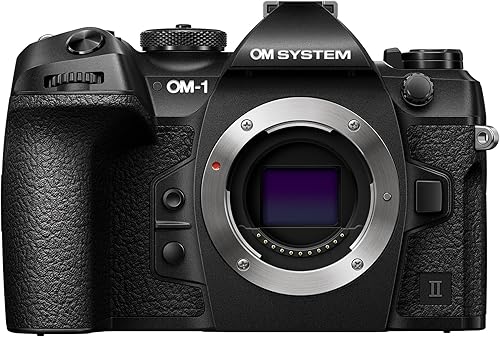
The OM System OM-1 Mark II proves that Micro Four Thirds still has a vital place in serious photography. The 20MP stacked BSI Live MOS sensor delivers a mind-bending 120fps burst rate for capturing split-second moments that full-frame cameras simply cannot — a hummingbird’s wingbeat, a raptor’s strike, a perfect water droplet. Computational photography modes produce 50MP and 80MP handheld high-resolution composites that overcome the sensor’s native resolution limit, using pixel-shift technology to capture detail that rivals cameras with three times the megapixel count. The IP53-rated weather sealing handles rain, dust, snow, and temperatures down to -10°C with confidence, while 8.5-stop IBIS — the best in any camera system — enables handheld shots at shutter speeds other photographers would never attempt without a tripod. The entire system is dramatically smaller and lighter than full-frame equivalents: pair it with the M.Zuiko 12-100mm f/4 IS PRO and you have a 24-200mm equivalent kit that weighs barely over a kilogram, fitting comfortably in a small shoulder bag for all-day hiking and travel.
✅ PROS
- 120fps burst captures moments impossible on other systems
- Computational high-res: 50/80MP handheld composites
- IP53 weather sealing for rain, dust, and -10°C cold
- Smallest, lightest interchangeable-lens system
- 8.5-stop IBIS is class-leading across all formats
✖ CONS
- 20MP limits print size and cropping vs full-frame
- MFT sensor struggles with noise above ISO 3200
- $2,199 is expensive for MFT — FF alternatives exist
- Shallower depth-of-field control
- MFT lens ecosystem has fewer new releases
How We Ranked the Best Cameras for Photography of 2026
Every ranking on TheShoposaurus starts with extensive research: we evaluate dozens of expert reviews and lab tests, verify manufacturer specifications against official sources, and weigh thousands of verified owner experiences to find the best cameras for photography for real-world use. Products are scored on image quality, autofocus, lens ecosystem, handling, and value.
- Best cameras for photography — Best Overall: Canon EOS R5 Mark II
- Best cameras for photography — Best Resolution: Sony A7R V
- Best cameras for photography — Best All-Around: Sony A7V
- Best cameras for photography — Best Sweet Spot: Canon EOS R6 Mark III
- Best cameras for photography — Best Pro Value: Nikon Z8
What is the best camera for photography in 2026?
The best camera for photography in 2026 depends on your level, but the top all-rounders pair a large sensor, fast and accurate autofocus, and access to a strong lens lineup. Full-frame mirrorless models lead for image quality and low-light work, while APS-C cameras offer nearly the same quality in a smaller, more affordable package.
DSLR vs mirrorless — which is better for photography?
Mirrorless is the better choice for almost everyone in 2026. It offers lighter bodies, faster and smarter autofocus with reliable eye-tracking, silent shooting, and a live preview of your exposure, and it is where every manufacturer now invests. DSLRs still take excellent photos and have great battery life, but their lineups are no longer being developed, so mirrorless is the future-proof pick.
Full frame vs crop sensor — which do you need?
Full-frame sensors gather more light for better low-light performance and shallower depth of field, and they are worth it for professionals and landscape shooters. Crop-sensor (APS-C) cameras are smaller, lighter, and cheaper, add reach for wildlife and sports, and produce images most people cannot tell apart in good light. For most enthusiasts, a modern APS-C camera is more than enough.
How much should you spend on a camera for photography?
A great enthusiast setup runs $900–$1,500 for a modern APS-C body and a versatile lens. Beginners can start well under $700, while full-frame bodies and pro lenses push $2,500 and up. Budget for lenses too — they matter more to image quality than the body and outlast several camera upgrades.
Do you need a full-frame camera for photography?
No. Full-frame delivers the best low-light performance and background blur, but modern APS-C cameras produce stunning results for travel, portraits, street, and everyday photography at a fraction of the size and cost. Buy full-frame only if you regularly shoot in low light, need the shallowest depth of field, or make large professional prints.