📷 STILL PHOTOGRAPHY HEAD-TO-HEAD
Fujifilm X-T5 vs Sony a6700 — Photographer’s Camera vs Hybrid Powerhouse
Two of the finest APS-C mirrorless cameras target very different photographers. Fujifilm delivers a 40MP stills-first machine with analog dials and legendary color science; Sony counters with AI autofocus, 4K 120p video, and the world’s largest mirrorless lens ecosystem.
⚡ Quick Verdict
The Fujifilm X-T5 is the better stills camera — its 40MP X-Trans BSI sensor delivers 54% more resolution, and Fujifilm’s film simulations, analog dials, and class-leading EVF make it the more satisfying camera to shoot with. The Sony a6700 is the better hybrid camera — its AI autofocus, 4K 120p video, compact body, and massive E-mount lens ecosystem make it more versatile for creators who shoot both stills and video.
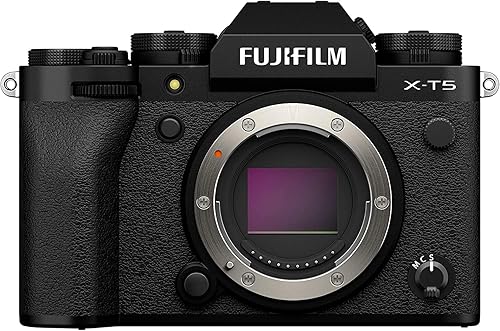
VS

| Specification | X-T5 | Sony a6700 |
|---|---|---|
| Sensor | 40.2MP APS-C X-Trans BSI CMOS | 26MP APS-C Exmor R BSI CMOS |
| Processor | X-Processor 5 | BIONZ XR + AI Processing Unit |
| AF Points | 425 phase-detect | 759 phase-detect (93% coverage) |
| Burst Rate | 15fps mech / 20fps electronic | 11fps with AF/AE |
| Video (Max) | 6.2K 30p / 4K 60p (cropped) | 4K 120p / 1080p 240p |
| IBIS | 5-axis, up to 7 stops | 5-axis |
| EVF | 3.69M-dot OLED (0.8x magnification) | 2.36M-dot OLED |
| LCD | 3.0″ 3-way tilt, 1.84M dots | 3.0″ vari-angle, 1.04M dots |
| Card Slots | Dual UHS-II SD | Single UHS-II SD |
| Battery Life | ~740 shots (NP-W235) | ~570 shots (NP-FZ100) |
| Film Simulations | 20 modes (incl. REALA ACE) | Creative Look profiles |
| Subject Detection | Face/eye, animals, birds, vehicles | AI: humans (pose), animals, birds, insects, cars, trains, planes |
| Weight | 557g | 493g |
| Weather Sealed | Yes | Yes |
| Lens Mount | Fujifilm X-mount | Sony E-mount |
| ISO Range | 125–12,800 (ext. 64–51,200) | 100–32,000 (ext. 50–204,800) |
| Price (body) | ~$1,699 | ~$1,398 |
Image Quality & ResolutionWinner: X-T5
The X-T5’s 40.2MP X-Trans CMOS 5 HR sensor is the highest-resolution APS-C sensor available in any mirrorless camera, delivering 54% more pixels than the a6700’s 26MP Exmor R chip. Both use backside-illuminated (BSI) designs for improved light-gathering efficiency, but the resolution gap is substantial and visible in practice. Landscape photographers will notice more micro-detail in foliage, rock textures, and architectural elements. Wildlife shooters gain significantly more cropping latitude — critical when you can’t get close enough to fill the frame. Portrait photographers can print wall-size enlargements with razor-sharp detail. The X-Trans pixel array offers an additional advantage: its unique non-Bayer arrangement of color filters eliminates moiré patterns without requiring an optical low-pass filter, meaning every pixel captures maximum sharpness. The a6700’s 26MP sensor isn’t weak — it’s borrowed from Sony’s FX30 cinema camera and delivers excellent detail for its resolution class. Its larger individual pixels (due to fewer total pixels on a similar-sized sensor) provide a measurable advantage in high-ISO noise performance, pulling ahead of the X-T5 by roughly a third of a stop above ISO 6400. In S-Log3, the a6700 delivers over 14 stops of dynamic range, slightly exceeding the X-T5’s F-Log2 latitude. For photographers who rarely crop and primarily deliver to screen-sized outputs, the resolution difference is academic. For those who crop aggressively or print large, the X-T5’s 40MP is a decisive advantage.
X-T5: 40.2MP delivers extraordinary detail for APS-C. The X-Trans BSI sensor eliminates moiré without a low-pass filter. 7-stop IBIS enables razor-sharp handheld shots.
Sony a6700: 26MP BSI sensor with larger pixels offers slightly better high-ISO noise performance. 14+ stops of dynamic range in S-Log3 makes it more flexible for video grading.
Autofocus & TrackingWinner: Sony a6700
Sony’s dedicated AI processing unit gives the a6700 a clear and consistent autofocus advantage that goes beyond simple point counts. The 759 phase-detect points cover 93% of the sensor area with Real-Time Tracking that uses machine learning to predict subject movement — it doesn’t just follow where your subject is, it anticipates where they’re going. Lock onto a bird in flight and the system sticks through banking turns, brief obstructions from branches, and dramatic changes in speed and direction. It recognizes humans not just by face and eye but by body pose, maintaining tracking even when a subject turns completely away from the camera. The subject catalog extends to animals, birds, insects, cars, trains, and airplanes — the widest recognition range in any APS-C camera. The X-T5’s 425-point hybrid AF system is a significant improvement over previous Fujifilm generations and handles face, eye, animal, bird, and vehicle detection with reasonable competence in good lighting. Where it falls short is in the tenacity of tracking through complex, cluttered scenes — the kind of situation where a bird passes behind a tree or a runner weaves through a crowd. Fujifilm’s system is more likely to lose the subject momentarily and re-acquire, while Sony’s AI maintains lock. Low-light AF acquisition is also somewhat slower on the X-T5, occasionally hunting in dimly lit venues where the a6700 locks without hesitation. For controlled photography — landscapes, portraits, studio, architecture — the X-T5’s AF is perfectly adequate. For unpredictable action and wildlife, the a6700 has a meaningful and consistent advantage.
X-T5: 425-point hybrid AF handles face/eye and animal tracking reliably. Focus bracketing and in-camera focus stacking available. AF joystick for instant point adjustment.
Sony a6700: AI-powered 759-point Real-Time Tracking is the best subject recognition in any APS-C camera.
Shooting Experience & ControlsWinner: X-T5
The X-T5 is designed for photographers who love the process of making photographs, not just the results. Fujifilm has made a deliberate, philosophical choice to build a camera that rewards intentional, hands-on shooting over automated convenience. Three dedicated analog dials sit prominently on the top plate: shutter speed on the right (with detents from 1 second to 1/8000 plus Bulb and Timed modes), ISO in a stacked dial beneath the shutter speed dial, and exposure compensation on the left. Each clicks with satisfying precision into its selected position. You can read your complete exposure triangle with the camera powered off — just glance at the top plate and the lens aperture ring. This is the way cameras worked for decades, and many photographers find it more intuitive and more pleasurable than navigating electronic menus. The 3.69-million-dot OLED electronic viewfinder is 57% higher resolution than the a6700’s 2.36M-dot unit, and at 0.8x magnification it provides a large, crystal-clear view that makes precise manual focus and critical composition genuinely enjoyable. The dedicated AF joystick sits right where your thumb naturally rests, allowing instant focus point repositioning without lifting your eye from the viewfinder. Front and rear command dials provide additional control over aperture and other parameters. The 3-way tilt LCD stays aligned with the lens axis — a design choice that many photographers prefer over the a6700’s vari-angle flip-out screen, which swings to the side and breaks the sight line. The Sony a6700 uses a conventional PASM mode dial approach with a customizable rear command dial. It’s efficient and familiar, but it lacks the tactile engagement that defines the Fujifilm experience. Buttons are smaller and feel plasticky by comparison, and the absence of a dedicated AF joystick means focus point adjustment relies on touchscreen tapping or the rear dial — workable but slower and less precise.
X-T5: Analog dials for shutter speed, ISO, and EC. AF joystick for instant focus point control. 3.69M-dot EVF at 0.8x magnification is class-leading.
Sony a6700: Mode dial with customizable C1/C2 positions. Compact control layout works well for video. Vari-angle screen flips for selfie mode. No AF joystick.
Video CapabilitiesWinner: Sony a6700
The a6700 is the decisively superior video camera, and for hybrid creators who split their time between stills and motion, this could be the deciding factor. Its headliner is 4K recording at 120 frames per second — true full-resolution slow-motion that the X-T5 simply cannot produce at any setting. This means buttery-smooth 5x slow-motion at a resolution that’s genuinely broadcast and streaming quality, without the dramatic resolution penalty of dropping to 1080p. The codec options come directly from Sony’s Cinema Line: 10-bit 4:2:2 XAVC HS with S-Log3 delivers over 14 stops of dynamic range for maximum post-production latitude. S-Cinetone provides a ready-to-share cinematic look with pleasing skin tones and smooth highlight rolloff — footage that looks professionally graded straight out of the camera. Custom LUT loading lets you preview your desired color grade on the rear screen while recording in log, eliminating the guesswork of flat profiles. Auto Framing uses AI to automatically crop and recompose the 4K frame, keeping solo creators centered during recording without a camera operator or gimbal — transformative for vloggers and one-person production teams. The X-T5 records 6.2K at 30fps for extraordinary still-frame grabs and 4K at 60fps, but the 4K 60p mode applies a 1.17x crop that narrows the field of view. F-Log2 provides respectable grading latitude, and all 20 film simulations can be applied to video — a unique creative advantage that lets you shoot Nostalgic Neg or Classic Chrome video without any post-production. For photographers who occasionally capture video clips, the X-T5 is perfectly capable. For anyone who treats video as a co-equal deliverable alongside stills, the a6700 is in a categorically different league.
X-T5: 6.2K 30fps and 4K 60fps (1.17x crop) with F-Log2 and 20 film simulations applicable to video. Capable but not its primary purpose.
Sony a6700: 4K 120fps is the headline feature. S-Log3, S-Cinetone, and custom LUTs from the Cinema Line. Auto Framing automatically recomposes for solo creators.
Color Science & Film SimulationsWinner: X-T5
Fujifilm’s 20 film simulations are not just a feature — they’re the primary reason many photographers choose the X-T5 over technically comparable cameras from other brands. Each simulation is based on decades of Fujifilm’s analog film emulsion expertise: Classic Negative recreates the look of Fuji’s Superia consumer film with deep shadows and desaturated highlights; ACROS delivers the finest digital black-and-white with gorgeous grain structure; Nostalgic Neg produces warm, faded tones reminiscent of vintage amber-era film; REALA ACE — the newest addition — aims for the most natural, true-to-life color reproduction with controlled contrast. These aren’t Instagram filters slapped onto a sensor output. They’re sophisticated color science profiles developed by engineers who spent decades perfecting analog film chemistry, translated into digital algorithms that produce emotionally distinctive images with genuine character. Many Fujifilm photographers never open a RAW editor — the JPEG output with a carefully chosen simulation, perhaps with minor tweaks to grain, shadow tone, and highlight tone, is their final image. A vibrant online community has emerged around “film simulation recipes,” sharing custom combinations that replicate specific analog film stocks like Kodak Portra 400, Fuji Pro 400H, and Cinestill 800T. Sony’s Creative Look profiles serve a similar function but lack the depth, variety, and emotional character of Fuji’s system. They’re competent starting points for editing but rarely inspire the “shoot and share” workflow that makes Fujifilm cameras feel like creative partners rather than capture devices. S-Cinetone is the notable exception — a genuinely useful cinematic profile for video work — but it’s one profile against Fuji’s twenty. Sony’s real strength is post-production flexibility: S-Log3 captures the maximum possible dynamic range and color information, giving professional colorists extraordinary latitude. But that workflow requires editing software, time, and skill — resources that Fuji’s film simulations let you skip entirely.
X-T5: 20 film simulations deliver emotionally distinctive JPEGs that rival color-graded files. The recipe-sharing community adds endless creative possibilities.
Sony a6700: Creative Look profiles are functional but lack Fuji’s character. S-Cinetone provides a pleasing cinematic look. The real strength is S-Log3’s grading flexibility.
Value & Lens EcosystemWinner: Sony a6700
The a6700 costs $300 less at $1,398 versus the X-T5’s $1,699 — a meaningful 18% savings that compounds further when you factor in lens ecosystem economics. Sony’s E-mount is the largest mirrorless lens ecosystem in existence, with over 70 native Sony lenses and hundreds more from Sigma, Tamron, Samyang, Viltrox, and other third-party manufacturers. Fast, sharp prime lenses start shockingly low: the Sigma 30mm f/1.4 costs around $290, the Sigma 56mm f/1.4 around $450, and the Tamron 17-70mm f/2.8 — arguably the most versatile APS-C zoom ever made — runs about $750. Building a complete three-lens kit with the a6700 can cost $600–800 less than an equivalent Fujifilm setup. Critically, every Sony FE full-frame lens mounts natively on the a6700 with full autofocus, stabilization, and electronic communication. This means you can invest in premium FE glass now — like the Sony 85mm f/1.4 GM or Sigma 24-70mm f/2.8 Art — and carry those lenses to a Sony A7C II, A7 IV, or A7R V body when you’re ready to upgrade to full frame. It’s an ecosystem investment that pays forward. Fujifilm’s X-mount has excellent glass — the XF 23mm f/1.4, XF 56mm f/1.2, and XF 50-140mm f/2.8 are legitimately world-class optics. But they’re generally 15–30% more expensive than Sony equivalents, the third-party selection is narrower, and there’s no full-frame upgrade path within the system. Moving up from X-mount means jumping to Fujifilm’s GFX medium format — a completely different sensor format and lens mount requiring new investment from scratch. For photographers who know they’ll stay APS-C and value Fuji’s glass quality, the ecosystem is excellent. For those who may want a full-frame upgrade path, Sony’s seamless E-mount continuity is a substantial long-term advantage.
X-T5: At $1,699, it’s the premium option. Fujifilm X-mount lenses are excellent but pricier. No full-frame upgrade path within the system.
Sony a6700: At $1,398, $300 less with the largest mirrorless lens ecosystem. Affordable Sigma/Tamron primes from ~$250. E-mount provides a seamless upgrade path to Sony full-frame.
X-T5 — Pros & Cons
- ✓ 40.2MP X-Trans BSI sensor — highest APS-C resolution available
- ✓ 20 film simulations including REALA ACE
- ✓ Analog dials for shutter, ISO, and EC — read settings with camera off
- ✓ 3.69M-dot EVF at 0.8x — class-leading viewfinder
- ✓ Dual UHS-II SD card slots
- ✓ 7-stop IBIS
- ✓ 740-shot battery life — 30% more than a6700
- ✓ In-camera focus stacking
- ✖ 4K 60p requires 1.17x crop — no 4K 120p
- ✖ AF tracking less tenacious than Sony’s AI system
- ✖ $1,699 is $300 more than a6700
- ✖ Slightly heavier at 557g
- ✖ 3-way tilt screen doesn’t flip for selfies
- ✖ X-mount ecosystem smaller and pricier
Sony a6700 — Pros & Cons
- ✓ AI-powered 759-point Real-Time Tracking AF
- ✓ 4K 120fps for true slow-motion
- ✓ S-Log3 / S-Cinetone / custom LUTs
- ✓ Compact and light at 493g
- ✓ Massive E-mount lens ecosystem
- ✓ $1,398 — $300 less than X-T5
- ✓ Auto Framing mode for solo creators
- ✓ Upgrade path to Sony full-frame
- ✖ 26MP delivers 54% fewer pixels than X-T5’s 40MP
- ✖ No dedicated analog dials
- ✖ Single SD card slot
- ✖ 2.36M-dot EVF is 36% lower resolution
- ✖ 570-shot battery life — 23% less
- ✖ No joystick for AF point control
- ✖ Creative Look profiles lack Fuji’s character
Buy the X-T5 if you…
- Prioritize still photography above video
- Love analog dials and a premium viewfinder
- Want 40MP for cropping and large prints
- Value Fujifilm’s film simulations
- Need dual card slots for professional backup
Buy the Sony a6700 if you…
- Shoot both stills and video and need 4K 120p
- Rely on AI autofocus for fast subjects
- Want the widest lens selection at affordable prices
- Prefer a compact lightweight body
- Plan to upgrade to Sony full-frame eventually
Final Verdict
The X-T5 is the photographer’s camera — its 40MP sensor, analog dials, film simulations, class-leading EVF, and dual card slots make it the best APS-C for dedicated still shooters. The a6700 is the creator’s camera — its AI AF, 4K 120p, compact body, and enormous lens ecosystem make it the better tool for hybrid shooters. At $300 less, the a6700 is also the better value. Choose with your priorities, not the spec sheet.
Frequently Asked Questions
Is the X-T5 better than the a6700 for photography?
For dedicated stills, yes. The 40MP sensor delivers more detail, the 3.69M-dot EVF is clearer, analog dials offer more satisfying control, and 20 film simulations produce better out-of-camera JPEGs.
Which is better for video?
The Sony a6700 wins decisively with 4K 120fps, S-Log3, S-Cinetone, Auto Framing, and more reliable AI AF tracking during video.
Are Fujifilm film simulations really that good?
Yes — modes like Classic Negative, Nostalgic Neg, ACROS, and REALA ACE produce distinctive JPEGs that many shooters share directly without editing.
Can I use Sony full-frame lenses on the a6700?
Yes. All Sony FE lenses mount natively with full autofocus and stabilization. The APS-C crop uses the center portion of the lens.
Why is the X-T5 more expensive?
The 40MP sensor, 3.69M-dot EVF, dual card slots, and premium analog control system justify the $300 premium for stills-focused photographers.
Which has better autofocus for birds and wildlife?
The Sony a6700’s AI Real-Time Tracking is generally more tenacious, especially through partial obstructions. The X-T5 handles birds well in good light but can lose subjects in challenging conditions.
Affiliate Disclosure: This comparison contains affiliate links. The Shoposaurus may earn a commission at no additional cost to you. See our full disclosure and editorial standards.