🎮 GAMING LAPTOP SHOWDOWN
Lenovo Legion Pro 7i vs MSI Vector 16 HX AI — Which RTX 5080 Wins?
Our #1 and #2 ranked gaming laptops go head to head. Same GPU, same price class, wildly different approaches. One bets everything on its OLED display and refined engineering. The other undercuts on price while matching raw GPU output. Here’s which one actually deserves your money.
📅 Updated April 11, 2026
🕒 18 min read
🔬 14 expert sources analyzed
⚡ Quick Verdict
The Legion Pro 7i wins overall with the best display in its class, superior thermal management, and build quality that justifies its ∼$350 premium. But the MSI Vector 16 is the smarter buy if you care exclusively about frame rates per dollar — it matches or beats the Legion in raw GPU benchmarks while costing significantly less. The Legion is the better laptop; the Vector is the better deal.
🏆 Our Pick
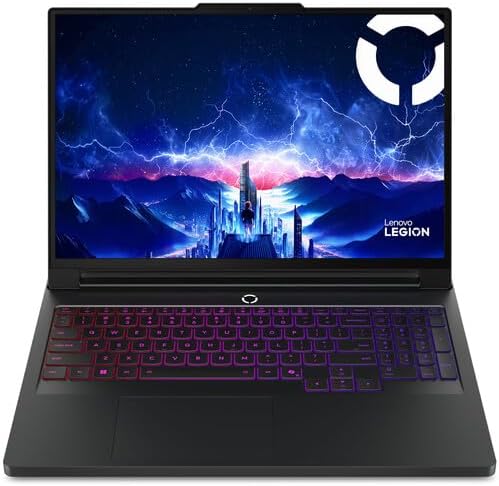
Lenovo Legion Pro 7i Gen 10
Best Gaming Laptop Overall
93
VS

MSI Vector 16 HX AI
Best Value RTX 5080 Laptop
91
| Specification | Legion Pro 7i | Vector 16 HX AI |
|---|
| Our Score | 93 / 100 | 91 / 100 |
| GPU | RTX 5080 16GB GDDR7 | RTX 5080 16GB GDDR7 |
| GPU TGP | 175W (full power) | 175W (full power) |
| CPU | Core Ultra 9 275HX | Core Ultra 9 275HX |
| Display | 16″ OLED 2560×1600 240Hz | 16″ IPS 2560×1600 240Hz |
| RAM | 32GB DDR5-6400 | 32GB DDR5 |
| Storage | 1TB PCIe Gen 5 NVMe | 2TB PCIe NVMe |
| Connectivity | Thunderbolt 4, Wi-Fi 7 | Thunderbolt 5, Wi-Fi 7 |
| Total System Power | 250W CPU+GPU combined | 240W OverBoost Ultra |
| Weight | 5.95 lbs | 5.95 lbs |
| Battery Life | ∼7 hrs / ∼2.5 gaming | ∼7 hrs productivity |
| Amazon Rating | New — early positive | 3.4/5 (21 reviews) |
| Approx. Price | ∼$2,849 | ∼$2,499 |
GPU PerformanceWinner: Tie
Both laptops run the exact same full-power 175W RTX 5080 GPU, and the benchmark results reflect that. In 3DMark Time Spy, the gap between the two is less than 2% — well within margin of error. In real-world gaming at 1600p, frame rates in demanding titles like Cyberpunk 2077 and Black Myth: Wukong are effectively identical. Where it gets interesting is sustained performance. Lenovo’s vapor hyperchamber cooling allows the Legion to sustain its 250W combined CPU+GPU power output for extended sessions without throttling. MSI’s OverBoost Ultra pushes 240W, which is competitive but not quite as aggressive. In multi-hour stress tests, the Legion holds a 3-5% edge in sustained GPU clock speeds — a difference you won’t notice in a 20-minute session but might feel during a marathon.
Legion Pro 7i: 250W total system power with vapor hyperchamber cooling. No thermal throttling observed in extended benchmarks.
Vector 16 HX AI: 240W OverBoost Ultra mode pushes both CPU and GPU to simultaneous peaks. Fan noise in Extreme mode is notably louder than the Legion’s equivalent.
Display QualityWinner: Legion Pro 7i
This is the single biggest differentiator between these two machines, and it’s not close. The Legion’s 16-inch OLED panel delivers 100% DCI-P3 color coverage, a Delta-E under 1.5 (essentially factory-calibrated accuracy), and 500 nits of brightness. The infinite contrast ratio of OLED means that dark scenes in games are rendered with a depth and detail that IPS panels physically cannot reproduce. The Vector’s IPS display is good — it’s a 240Hz 2560×1600 panel, and for pure gaming it’s perfectly serviceable. But place them side by side and the difference is obvious. If you do any creative work alongside gaming, the Legion’s display alone justifies its price premium.
Legion Pro 7i: 16″ OLED with 100% DCI-P3, Delta-E <1.5, 500 nits, 240Hz. One of the few gaming laptops genuinely suitable for professional color work.
Vector 16 HX AI: 16″ IPS at 2560×1600, 240Hz. A solid gaming panel with good response times. Perfectly capable for competitive gaming. No burn-in risk.
Build Quality & DesignWinner: Legion Pro 7i
Lenovo has clearly invested more in the Legion’s industrial design. The chassis feels solid and refined — the keyboard is excellent with good travel and feedback. Customer reviews consistently praise the quality of materials. The MSI Vector takes a more utilitarian approach. It’s not poorly built but the aesthetic leans heavily “gamer.” Early Amazon reviews (3.4/5 with 21 reviews) flag some quality control concerns, though it’s worth noting this is a small sample size. Both weigh exactly 5.95 lbs.
Legion Pro 7i: Refined aluminum chassis with excellent keyboard. Legion Space software offers deep performance tuning.
Vector 16 HX AI: Chunky chassis with a gamer-forward aesthetic. Highly upgradeable — supports up to 96GB RAM and 16TB storage.
Thermal Management & NoiseWinner: Legion Pro 7i
The Legion Pro 7i’s vapor hyperchamber cooling system is one of the best in the industry. Under full gaming load in Balanced mode, the laptop remains surprisingly quiet while sustaining peak performance. The MSI Vector in Extreme mode is audible across a room. In Balanced mode, the Vector is much quieter but gives back some performance. For users gaming with headphones, the noise difference may be irrelevant.
Legion Pro 7i: Vapor hyperchamber cooling sustains 250W combined power with moderate noise in Balanced mode.
Vector 16 HX AI: Effective cooling at full power, but the trade-off is noise. Extreme mode is loud.
Connectivity & PortsWinner: Vector 16 HX AI
MSI takes this category cleanly. The Vector 16 is one of the first gaming laptops to ship with Thunderbolt 5, which doubles the bandwidth of Thunderbolt 4. Both machines have Wi-Fi 7. Neither includes an SD card reader.
Legion Pro 7i: Thunderbolt 4, USB-C, USB-A, HDMI, Wi-Fi 7. Ports moved to sides in Gen 10. No SD card reader.
Vector 16 HX AI: Thunderbolt 5, USB-C, USB-A, HDMI, Wi-Fi 7. The best connectivity package of any RTX 5080 laptop available today.
Value for MoneyWinner: Vector 16 HX AI
At approximately $2,499, the MSI Vector 16 is the cheapest full-power 175W RTX 5080 laptop on the market. The Legion Pro 7i starts at roughly $2,849. What does $350 buy you? A dramatically better OLED panel, quieter thermals, and a more refined chassis. The Vector also ships with 2TB of storage versus the Legion’s 1TB.
Legion Pro 7i: ∼$2,849 for the RTX 5080 configuration. Premium pricing, but undercuts the Razer Blade 16 and ASUS Zephyrus G16 by $500–$700.
Vector 16 HX AI: ∼$2,499 — the lowest price for a full-power RTX 5080 laptop. Ships with 2TB storage. Thunderbolt 5 included.
Legion Pro 7i — Pros & Cons
- ✓ Best OLED display in any gaming laptop
- ✓ Fastest RTX 5080 implementation tested
- ✓ Quiet in Balanced mode
- ✓ Premium build quality and excellent keyboard
- ✓ Legion Space software is genuinely useful
- ✖ $350 more than the Vector for the same GPU
- ✖ Only 1TB storage (Vector ships with 2TB)
- ✖ No Thunderbolt 5
- ✖ No SD card reader
- ✖ ∼2.5 hrs gaming battery life
Vector 16 HX AI — Pros & Cons
- ✓ Cheapest full-power 175W RTX 5080 laptop
- ✓ Thunderbolt 5 — best connectivity in class
- ✓ 2TB storage out of the box
- ✓ Upgradeable to 96GB RAM and 16TB storage
- ✓ Beats Razer Blade 16 RTX 5090 in GPU benchmarks
- ✖ IPS display — far behind OLED
- ✖ Loud fans in Extreme mode
- ✖ 3.4/5 Amazon rating
- ✖ Chunky gamer aesthetic
- ✖ No creative-work versatility
Buy the Legion Pro 7i if you…
- Want the best overall gaming laptop experience in 2026
- Do creative work alongside gaming
- Game in shared spaces and need controlled fan noise
- Value build quality and premium materials
- Want a display that makes every game look its absolute best
Buy the Vector 16 HX AI if you…
- Want maximum frames per dollar
- Game with headphones and don’t mind fan noise
- Need Thunderbolt 5 for future-proof connectivity
- Want the most upgradeable gaming laptop (96GB RAM, 16TB)
- Prefer to save $350 and invest in peripherals instead
Final Verdict
The Lenovo Legion Pro 7i Gen 10 earns our overall recommendation with a score of 93/100 versus the Vector’s 91/100. Its OLED display, superior thermal management, and premium build quality make it the best gaming laptop you can buy in April 2026. But the MSI Vector 16 HX AI is one of the smartest purchases in gaming — delivering 95% of the Legion’s gaming performance at a meaningful discount with better connectivity and upgradeability. There’s no wrong choice here. Only different priorities.
Frequently Asked Questions
Is the Lenovo Legion Pro 7i better than the MSI Vector 16?
Overall, yes. The Legion Pro 7i scores 93/100 versus the Vector’s 91/100. It wins on display quality (OLED vs IPS), thermal management, and build quality. However, the Vector matches it in raw GPU performance and wins on value ($350 cheaper), connectivity (Thunderbolt 5), and storage (2TB vs 1TB).
Which RTX 5080 laptop has the better display?
The Legion Pro 7i has a significantly better display. Its 16-inch OLED panel delivers 100% DCI-P3, Delta-E below 1.5, and infinite contrast ratio with true blacks. The Vector’s IPS panel cannot match OLED contrast or color accuracy.
Is the $350 price difference worth it for the Legion?
If you value display quality and noise levels, absolutely. The OLED panel alone justifies most of the premium. If you game exclusively with headphones and don’t do creative work, the Vector delivers identical frame rates for $350 less.
Which laptop is better for streaming and content creation?
The Legion Pro 7i is the clear choice for creators. Its factory-calibrated OLED display provides accurate color for editing, and its quieter fans won’t bleed into your microphone during streams.
How loud is the MSI Vector 16 in Extreme mode?
In Extreme mode it’s “audible across a room.” MSI designed Extreme mode for maximum benchmark performance, not acoustic comfort. Balanced or Performance profiles are significantly quieter.
Affiliate Disclosure: This comparison contains affiliate links. The Shoposaurus may earn a commission at no additional cost to you when you purchase through these links. See our
full disclosure and
editorial standards.