Best Smart Thermostats
March 2026
From $79 Amazon Smart Thermostats to $279 Nest Learning flagships — energy savings measured over a full season, schedule learning accuracy, app reliability, and ecosystem support scored across the top 10 smart thermostats your HVAC bill will thank you for.
⚔️ Head to Head Battle
Ecobee Smart Thermostat Premium
Best Overall Smart Thermostat
The Ecobee Premium tops our ranking for its unmatched combination of sensor intelligence, ecosystem breadth, and energy performance. The included SmartSensor measures both temperature and occupancy, dynamically prioritizing comfort in the room you’re actually in rather than relying on a hallway reading. Built-in Alexa speaker handles voice commands, music, and smart home control without a separate device. An integrated air quality monitor tracks humidity and VOC levels in real time, alerting you when air quality drops. Compatible with Alexa, Google Home, Apple HomeKit, and SmartThings — the broadest ecosystem support in the category. Energy Star certified with up to 26% annual heating and cooling savings. Included Power Extender Kit handles homes without a C-wire.
✅ Pros
- Broadest ecosystem support — works with every major platform
- SmartSensor eliminates hot/cold spots across rooms
- Built-in Alexa speaker is genuinely useful for hands-free control
- Air quality and humidity monitoring included
- Power Extender Kit included for homes without C-wire
❌ Cons
- $249 is premium pricing for a thermostat
- Learning algorithm takes 7–10 days to calibrate
- Built-in speaker audio quality is mediocre vs. dedicated Echo
- Ecobee customer support has mixed reviews for response times
- Additional SmartSensors cost ~$100 for a two-pack
Google Nest Learning Thermostat (4th Gen)
Best Learning Algorithm
Google’s 4th-generation Nest is the most intelligent self-programming thermostat available. Its AI-driven learning algorithm studies your manual temperature adjustments and builds a fully optimized schedule within one to two weeks — no manual programming required. The borderless display shows weather, time, and energy usage at a glance via Dynamic Farsight, which activates automatically when you walk by. Matter-certified for cross-platform smart home compatibility, so it won’t lock you into a single ecosystem. Includes one Nest Temperature Sensor for multi-room balancing, and the Smart Schedule feature factors in outdoor weather conditions to reduce unnecessary heating on warm days. Deep Google Home integration means routines, voice control, and detailed energy reports work seamlessly.
✅ Pros
- Most advanced learning algorithm — adapts to habits within 1–2 weeks
- Stunning borderless display with Dynamic Farsight proximity detection
- Matter-certified for future-proof smart home integration
- Includes Nest Temperature Sensor for multi-room comfort
- Weather-aware scheduling adjusts heating based on outdoor conditions
❌ Cons
- $280 is the most expensive single-unit thermostat on this list
- Strongest with Google ecosystem — limited Apple HomeKit features
- No built-in air quality or humidity monitoring
- Additional Nest Temp Sensors cost ~$40 each
- Customer support can be slow for complex HVAC compatibility issues
Honeywell Home X8S Smart Thermostat
Best Smart Home Display Thermostat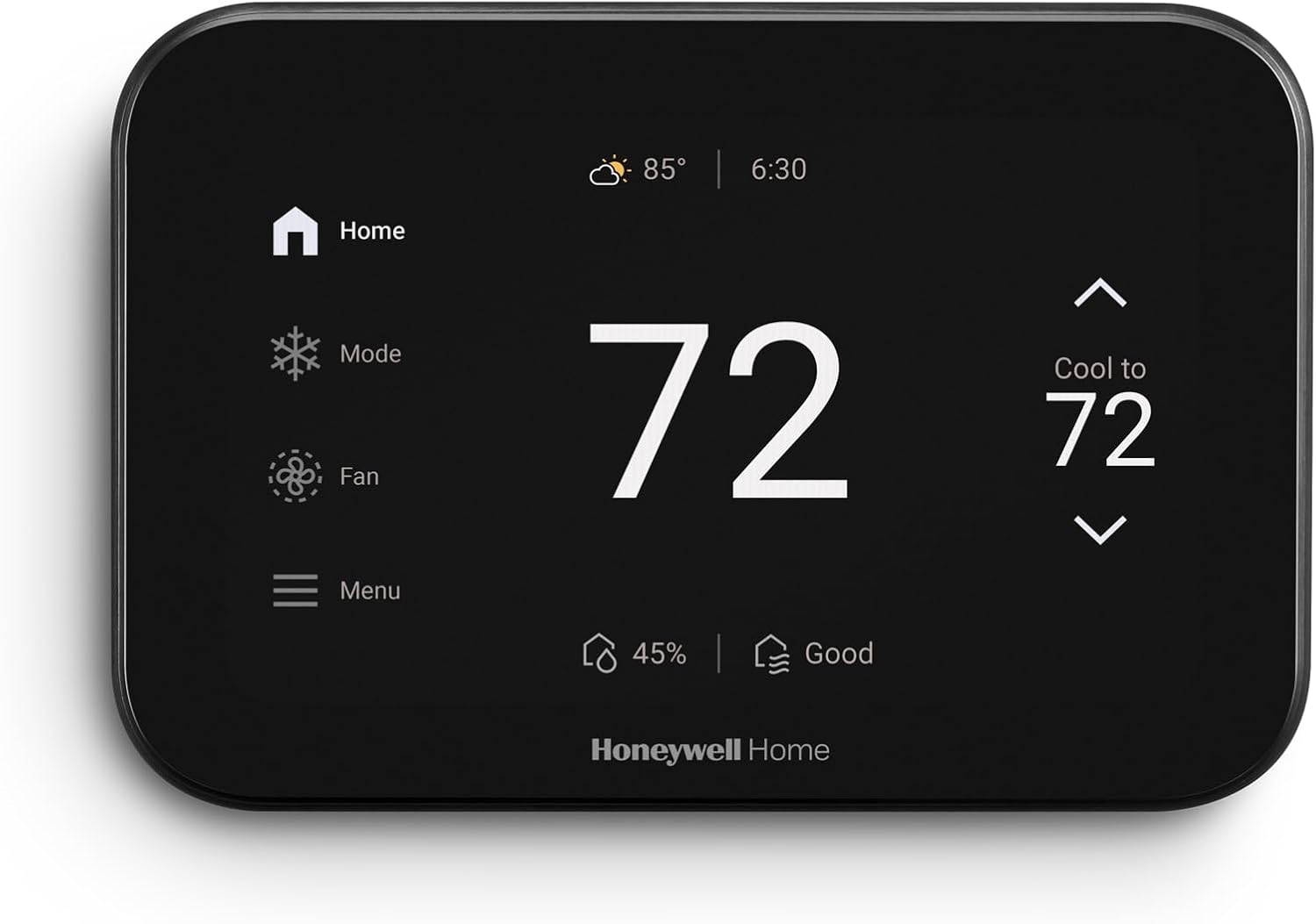
The Honeywell Home X8S, launched late 2025, redefines what a thermostat can do. Its 5-inch touchscreen is the largest in any smart thermostat, doubling as a home display that shows weather, clock, and live video feeds from compatible First Alert and Ring doorbells . Matter-certified and compatible with Alexa, Google Assistant, and Apple Home. Built-in indoor air quality monitoring tracks humidity and ventilation status, providing alerts when conditions fall outside healthy ranges. Occupancy-based Smart Sensing adjusts temperature automatically when you leave. Supports up to 20 optional room sensors with an industry-leading 200-foot wireless range. The customizable idle screen lets you personalize themes and colors to match your home’s decor.
✅ Pros
- Largest 5-inch touchscreen display in any smart thermostat
- Video doorbell integration — see and speak to visitors from thermostat
- Matter-certified for broad smart home compatibility
- IAQ monitoring with humidity and ventilation control
- Supports up to 20 room sensors with 200-foot range
❌ Cons
- Brand new product — long-term reliability still being established
- Uses First Alert app instead of native Honeywell app
- Video doorbell feature requires separate doorbell purchase
- No built-in voice assistant speaker like Ecobee
- Smart learning is basic compared to Nest or Ecobee algorithms
Amazon Smart Thermostat
Best Budget Smart Thermostat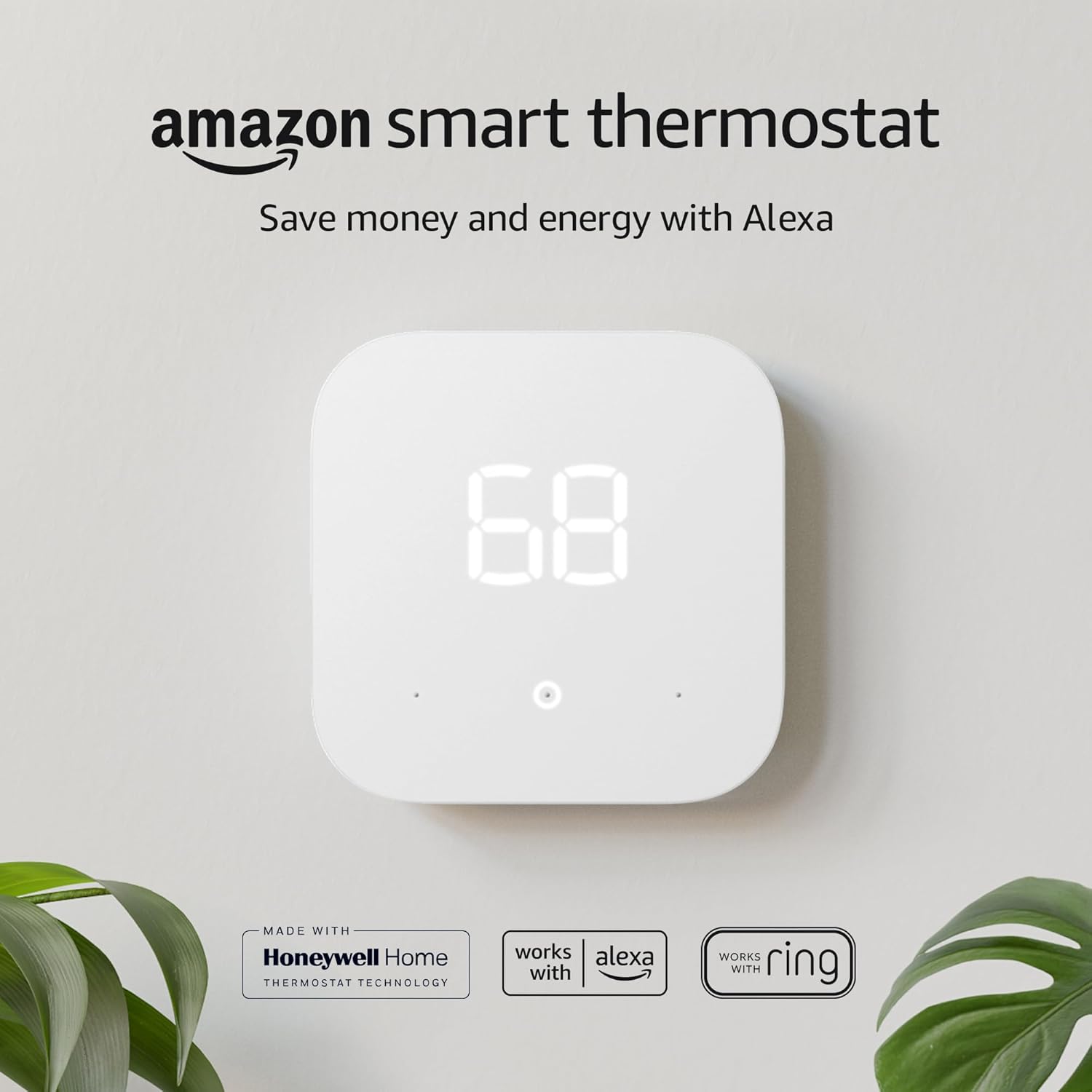
At $80, the Amazon Smart Thermostat delivers remarkable value by pairing Honeywell Home’s 130-year HVAC expertise with Alexa’s smart home ecosystem. It handles voice commands, automated routines, and flexible scheduling through any Echo device or the Alexa app. The Hunches feature analyzes your usage patterns and suggests energy-saving adjustments automatically — effectively learning without a dedicated learning algorithm. Energy Star certified with utility rebate eligibility that can cut the effective cost to near zero in many regions. Installation typically takes under 30 minutes with step-by-step in-app guidance. The latest firmware adds Echo device temperature sensing, vacation mode, and dedicated away mode for extended energy savings when you’re out of town.
✅ Pros
- $80 delivers 80% of premium thermostat features at a third of the price
- Honeywell Home technology provides proven HVAC reliability
- Alexa Hunches learns patterns and suggests energy savings
- Energy Star certified — qualifies for utility rebates in many states
- Guided app installation rated highly by thousands of reviewers
❌ Cons
- Alexa-only ecosystem — no Google Home or Apple HomeKit support
- No touchscreen — controlled via app or Alexa voice commands only
- No remote room sensors for multi-room temperature balancing
- C-wire required and adapter sold separately adds cost
- Basic display shows minimal temperature information
Sensi Touch 2 Smart Thermostat
Best HVAC Pro Pick
Built by Emerson/Copeland with over 100 years of heating and cooling expertise, the Sensi Touch 2 is the thermostat HVAC professionals install most often. Its app-guided installation process walks you through every wire connection, catching errors before they cause problems . The large, high-contrast color touchscreen is the most readable in the category. Broad HVAC compatibility handles conventional furnaces, heat pumps, and multi-stage systems with flexible 7-day scheduling. Compatible with optional Sensi Room Sensors for multi-room temperature balancing. Sensi explicitly commits to never selling user data — a meaningful differentiator for privacy-conscious buyers. Works with Alexa, Google, and Apple HomeKit. Energy Star certified with detailed monthly usage reports.
✅ Pros
- HVAC professional-recommended — broadest heating/cooling system compatibility
- Large touchscreen is the most readable display in the category
- Strong privacy commitment — Sensi will not sell personal data
- Works with all three major ecosystems including Apple HomeKit
- App-guided installation prevents wiring errors before they happen
❌ Cons
- No learning algorithm — schedules must be set manually
- Design is functional but not as sleek as Nest or Ecobee
- No built-in air quality monitoring
- Room sensors sold separately add to total cost
- Energy reports are basic compared to Ecobee or Nest analytics
Honeywell Home T9 Smart Thermostat
Best Multi-Room Sensor System
The Honeywell Home T9 leads the category in multi-room sensor coverage. It supports up to 20 Smart Room Sensors with a 200-foot wireless range — more than any competing thermostat — and each sensor detects both temperature and occupancy. The system automatically prioritizes comfort in occupied rooms. Reliable geofencing that detects when you leave and returns to eco mode. The Resideo app provides room-by-room temperature and humidity analytics, helping you pinpoint which zones are wasting energy. Compatible with Alexa and Google Assistant for voice control. For multi-story homes or households where different family members occupy different zones throughout the day, the T9’s 20-sensor network is the clear standout.
✅ Pros
- Supports up to 20 room sensors — most in the entire category
- Smart Room Sensors detect both temperature AND occupancy per room
- 200-foot sensor range covers large multi-story homes easily
- Room-by-room temperature and humidity analytics in app
- Reliable Honeywell HVAC expertise with proven hardware quality
❌ Cons
- Additional Smart Room Sensors cost ~$39 each
- No Apple HomeKit support limits Apple household integration
- App interface feels dated compared to Ecobee or Nest
- No built-in voice assistant or air quality monitoring
- Learning capabilities are basic compared to Nest auto-scheduling
Ecobee Smart Thermostat Enhanced
Best Mid-Range Value
Ecobee’s Enhanced delivers the same core thermostat platform as the $249 Premium — including the SmartSensor system, radar-based occupancy sensing, and compatibility with every major ecosystem — without the built-in Alexa speaker and air quality monitor. For users who already own smart speakers, this saves $60 while retaining every feature that directly affects temperature control and energy savings. Manual operation is responsive and intuitive, and the Schedule Assistant learns your daily routine over time, then recommends schedule optimizations. The 3-year warranty and 10-year design life match the Premium model. The eco+ platform works in the background to maximize savings using time-of-use rates and local weather data. Compatible with Alexa, Google Home, Apple HomeKit, and SmartThings.
✅ Pros
- Same core platform as Premium at $60 less
- SmartSensor system for multi-room temperature balancing
- Works with all four major ecosystems
- Schedule Assistant learns and recommends optimizations
- Power Extender Kit included for C-wire-less homes
❌ Cons
- No built-in Alexa speaker — need separate smart speaker
- No air quality or humidity monitoring
- SmartSensors not included — sold separately at ~$100/two-pack
- $190 still premium for a thermostat without built-in voice
- Radar occupancy sensing can trigger falsely from pets occasionally
Ecobee Smart Thermostat Essential
Best Budget Ecobee
Ecobee’s most affordable thermostat delivers the core energy-saving features that matter most at a significantly lower price. The eco+ software platform adjusts temperature based on occupancy detection and your schedule, claiming up to 23% annual savings. The color touchscreen provides intuitive on-device control, and the Ecobee app — rated 4.6 stars across app stores — offers full remote management from anywhere. Compatible with Apple HomeKit, Google Assistant, and Alexa. The Power Extender Kit is available separately for homes without a C-wire. No remote SmartSensors at this tier, but the built-in occupancy sensing handles single-zone optimization effectively. For buyers who want Ecobee’s build quality without the premium price, this is the entry point.
✅ Pros
- Ecobee quality and ecosystem support at $120 entry price
- eco+ platform delivers meaningful energy savings automatically
- Works with all three major voice assistants and HomeKit
- Color touchscreen with intuitive Ecobee app control
- Free software updates ensure long-term feature improvements
❌ Cons
- No remote SmartSensors — single-zone only at this price
- Power Extender Kit sold separately adds cost for older homes
- No air quality monitoring or built-in voice assistant
- Occupancy sensing is less sophisticated than Enhanced/Premium
- $120 still more expensive than Amazon or Honeywell X2S options
Honeywell Home X2S Smart Thermostat
Best Entry-Level Smart Thermostat
At roughly $55, Honeywell’s X2S is the least expensive name-brand smart thermostat you can buy. It delivers Wi-Fi connectivity, 7-day programmable scheduling, and voice assistant compatibility at a price point that undercuts even the Amazon Smart Thermostat. Compatible with Alexa and Google Assistant for hands-free control. Energy Star certified and eligible for utility rebates. The clean, minimal design mounts flush to the wall, and Honeywell’s app provides reliable remote control and basic scheduling from anywhere. No learning algorithm or room sensors at this tier, but for single-zone households that want app-based temperature control from a brand with 130+ years of HVAC engineering behind it, the X2S delivers solid fundamentals without unnecessary complexity.
✅ Pros
- ~$55 is the lowest price for a name-brand smart thermostat
- Honeywell Home reliability with 130+ years of HVAC expertise
- Energy Star certified — qualifies for utility rebates
- Alexa and Google Assistant voice control
- Clean minimal design with simple remote app control
❌ Cons
- No learning algorithm — all schedules must be set manually
- No room sensors or occupancy detection
- No Apple HomeKit support
- Very basic display with limited on-device information
- No air quality monitoring or advanced smart features
Google Nest Thermostat
Best Budget Google Option
Google’s standard Nest Thermostat delivers smart home integration and energy reporting at roughly half the $280 Learning Thermostat’s price. The mirrored display blends elegantly into walls , and the side-mounted touch strip provides quick temperature adjustments without opening the app. Google’s Suggested Schedules feature offers pre-built temperature programs based on your zip code and local climate patterns, though it lacks the Learning Thermostat’s automatic habit adaptation. Energy reports in the Google Home app break down heating vs. cooling runtime to help identify savings. Compatible with Google Assistant and Alexa for voice control. For Google Home households that want smart scheduling and energy tracking without the premium price tag, this is the right entry point.
✅ Pros
- $130 with full Google Home integration and energy reports
- Elegant mirrored display design blends into any wall
- Sideswipe touch strip for quick temperature adjustments
- Google Suggested Schedules simplify initial programming
- Energy Star certified with utility rebate eligibility
❌ Cons
- No auto-learning algorithm — manual scheduling required
- No remote room sensors for multi-zone homes
- No Apple HomeKit support
- Basic compared to the 4th Gen Learning model features
- Limited on-device display information
How We Ranked the Best Smart Thermostats of 2026
Every ranking on TheShoposaurus starts with extensive research: we evaluate dozens of expert reviews and lab tests, verify manufacturer specifications against official sources, and weigh thousands of verified owner experiences to find the best smart thermostats for real homes. Products are scored on energy savings, smart-home compatibility, ease of installation, features, and value.
- Best smart thermostats — Best Overall Smart Thermostat: Ecobee Smart Thermostat Premium
- Best smart thermostats — Best Learning Algorithm: Google Nest Learning Thermostat (4th Gen)
- Best smart thermostats — Best Smart Home Display Thermostat: Honeywell Home X8S Smart Thermostat
- Best smart thermostats — Best Budget Smart Thermostat: Amazon Smart Thermostat
- Best smart thermostats — Best HVAC Pro Pick: Sensi Touch 2 Smart Thermostat
What is the best smart thermostat in 2026?
The best smart thermostats combine easy scheduling, geofencing, and energy-saving automation with wide smart-home compatibility. Top models from ecobee, Google Nest, and Honeywell learn your habits, adjust automatically, and work with Alexa, Google Home, and often Apple HomeKit — cutting heating and cooling costs while keeping your home comfortable.
Do smart thermostats save money?
Yes — most save roughly 8–15% on heating and cooling by scheduling around your routine, using geofencing to ease off when you are away, and running eco modes during peak hours. The savings typically pay for the thermostat within about two years, and many utilities offer rebates that shorten that further.
Are smart thermostats worth it?
For most homes, yes. Beyond the energy savings, a smart thermostat adds remote control from your phone, automatic scheduling, and comfort features like room sensors and humidity control. If you have central heating and cooling and spend on utilities year-round, the convenience and savings make it a clear upgrade.
Do smart thermostats work without a C-wire?
Many do. Some include a power adapter or C-wire kit, and others use technology that works without one, though a C-wire provides the most reliable power. Before buying, check your existing wiring — most brands have an online compatibility checker — so you know whether you will need an adapter.
Which smart thermostats work with Alexa, Google, and HomeKit?
Most leading smart thermostats work with Alexa and Google Home for voice control and routines. Apple HomeKit support is less universal — ecobee and Honeywell Home models typically include it, while some Nest models do not — so if you use Apple Home, confirm HomeKit compatibility before buying.