🎧 HEAD-TO-HEAD COMPARISON
Nothing Ear (3) vs AirPods 4 — Same Price, Very Different Earbuds
Both cost $179. Both offer ANC. But the Nothing Ear (3) gives Android users hi-res audio, deeper bass, and a Super Mic case—while the AirPods 4 deliver Apple ecosystem magic with an open-fit design. We compared 14 expert sources to settle this cross-platform earbud showdown.
📅 April 2026
🕒 12 min read
🔬 14 sources reviewed
⚡ Quick Verdict
The Nothing Ear (3) is the better earbud for most people—it offers stronger ANC thanks to silicone tips, significantly more bass, LDAC hi-res audio, a versatile 10-band EQ, and a Super Mic case for crystal-clear calls. The AirPods 4 ANC wins if you’re deep in the Apple ecosystem and prefer the open-fit (no ear tips) design. For Android users, it’s not even close—go Nothing. For iPhone users, it depends on whether you value sound quality or ecosystem integration more.
🏆 Our Pick
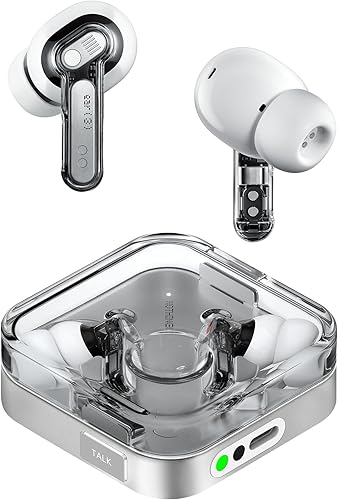
Nothing Ear (3)
Hi-res audio meets sci-fi design
85
VS
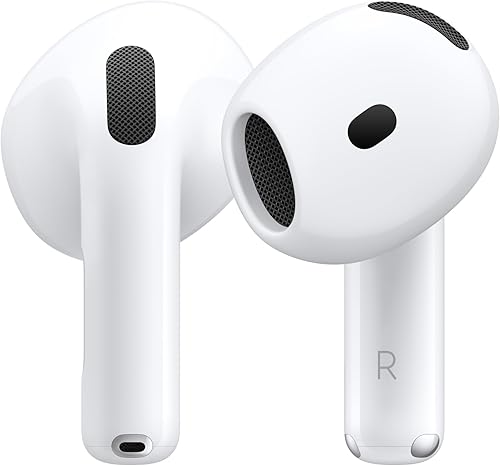
Apple AirPods 4 (ANC)
Apple ecosystem integration perfected
83
| Specification | Ear (3) | AirPods 4 |
|---|
| Price | ~$179 | ~$179 |
| Release Date | Sep 2025 | Sep 2024 |
| Driver Size | 12mm | 11mm (Apple custom) |
| Bluetooth | 5.4 | 5.3 (H2 chip) |
| Hi-Res Codecs | LDAC, LHDC 5.0 | AAC only |
| ANC Depth | 45dB hybrid ANC | Adaptive ANC (H2) |
| Ear Tips | Silicone (S/M/L) | Open-fit (no tips) |
| Battery (ANC On) | ~5.5 hrs / 37.5 hrs total | ~5 hrs / 30 hrs total |
| Microphones | 6 mics + Super Mic case | 2 per bud |
| Water Resistance | IP54 | IP54 |
| Wireless Charging | Yes (case) | Yes (case) |
| Multipoint | Yes (2 devices) | Apple auto-switch |
| Spatial Audio | Yes (new in Ear 3) | Personalized Spatial Audio |
| App EQ | 10-band parametric | No custom EQ |
| Weight (per bud) | ~4.8g | ~4.3g |
| Colors | Black, White | White only |
| Find My / Tracking | Google Fast Pair | Find My + U2 chip |
Sound QualityWinner: Ear (3)
The Nothing Ear (3) deliver a bass-heavy, vibrant sound with deep sub-bass extension that Apple simply cannot match at this price—reviewers consistently praised its impact for bass-forward genres. With LDAC and LHDC 5.0 codec support, Android users get genuinely hi-res wireless audio. The 10-band parametric EQ allows fine-tuning that dramatically improves the experience. The AirPods 4 sound balanced and clean with Apple’s signature smoothness, and their Personalized Spatial Audio with head tracking is impressive for movies. However, without any EQ customization and limited to AAC, the AirPods’ sound is what Apple gives you—take it or leave it. Nothing gives you tools to make it yours.
Ear (3): Bass-heavy, vibrant tuning with deep sub-bass. LDAC + LHDC 5.0 for hi-res wireless on Android. 10-band parametric EQ for precise customization. Wider, airier soundstage on default. Mids can sound slightly hissy.
AirPods 4: Balanced, smooth signature with Apple’s characteristic clarity. Personalized Spatial Audio with head tracking is best-in-class for video. AAC-only limits resolution. No custom EQ—you get what Apple tunes. Darker, warmer sound.
Noise CancellationWinner: Ear (3)
This is where the fundamental design difference matters most. The Nothing Ear (3) uses silicone ear tips that create a physical seal—delivering both passive isolation and 45dB hybrid ANC. The AirPods 4 use an open-fit design with no ear tips, relying entirely on their H2 chip’s active processing to cancel noise. The Nothing blocks significantly more ambient sound, especially in the mid-to-high frequency range. The AirPods 4’s ANC is impressive for an open-fit earbud, but it physically cannot match the seal-based isolation of in-ear tips.
Ear (3): Silicone tips create physical seal + 45dB hybrid ANC. Effective at blocking commute noise, office chatter, and low-frequency hums. Improved over previous Nothing Ear models. Struggles somewhat in heavy wind.
AirPods 4: Open-fit ANC without ear tips—impressive for what it is but physically limited. Adaptive transparency mode is good. Blocks low-frequency sounds decently but lets through mid/high voices. ANC for open-fit, not in-ear.
Design & ComfortWinner: Tied
Design philosophy is the core difference here. The Nothing Ear (3) features a transparent, sci-fi aesthetic with a stem design and silicone tips—it’s a statement piece that looks unlike anything else. The AirPods 4 are minimalist Apple white with a tipless open-fit. Comfort is highly personal: if you dislike things in your ear canal, AirPods win. If you want a secure, sealed fit, Nothing wins. The AirPods tend to fall out during movement, while the Nothing stays more secure thanks to its tips. The Nothing case features a unique Super Mic for calls; the AirPods case has Find My with a speaker and U2 chip.
Ear (3): Transparent sci-fi design that stands out. Silicone tips for secure, sealed fit. Case features Super Mic for crystal-clear calls (dual mics in case). Slightly heavier per bud at ~4.8g. IP54 rated.
AirPods 4: Classic Apple minimalist white. Open-fit (no tips)—some love it, others find buds fall out. Case has Find My with U2 chip and built-in speaker. Lighter at ~4.3g per bud. IP54 rated.
Call QualityWinner: Ear (3)
The Nothing Ear (3)’s standout feature is its Super Mic—a dual-microphone system built into the charging case that filters 95dB of ambient noise when you hold it near your mouth. Reviewers praised it as offering call quality approaching professional-grade clarity in noisy environments. The AirPods 4 have decent call quality especially on FaceTime (with AAC-ELD codec), but their open-fit design lets more ambient noise reach the microphone. For anyone who takes calls in noisy settings, the Nothing’s Super Mic is a genuine differentiator.
Ear (3): Super Mic in case filters 95dB of ambient noise for calls. Press Talk button and hold case near mouth for crystal-clear voice. Also has 6 standard mics on earbuds. Works with both Android and iPhone.
AirPods 4: Decent call quality, especially on FaceTime with AAC-ELD. Open-fit design lets more ambient noise reach mics. No case microphone feature. Best call experience requires Apple devices.
Ecosystem & CompatibilityWinner: AirPods 4 (for iPhone users)
If you own an iPhone, iPad, Mac, and Apple Watch, the AirPods 4 are nearly unbeatable for seamless integration. Instant pairing, automatic device switching, Personalized Spatial Audio, and Find My tracking all work flawlessly in Apple’s ecosystem. However, AirPods are severely limited on Android—basic Bluetooth audio only, no app, no customization. The Nothing Ear (3) works equally well on both platforms: full app support on iOS and Android, LDAC on Android, Google Fast Pair, and Microsoft Swift Pair. For cross-platform users or Android owners, Nothing is the clear choice.
Ear (3): Full-featured on both Android and iOS. Nothing X app available on both platforms. LDAC on Android for hi-res audio. Google Fast Pair + Microsoft Swift Pair. Equal experience regardless of phone brand.
AirPods 4: Unmatched Apple ecosystem integration: instant pairing, auto-switch between Apple devices, Find My, head-tracking Spatial Audio. Severely limited on Android—basic audio only, no app, no customization.
Ear (3) — Pros & Cons
- ✓ LDAC and LHDC 5.0 hi-res codec support for genuine hi-res wireless audio
- ✓ Stronger ANC thanks to silicone tips creating physical seal + 45dB hybrid cancellation
- ✓ Super Mic case delivers crystal-clear call quality in noisy environments
- ✓ 10-band parametric EQ for precise sound customization on both iOS and Android
- ✓ Transparent sci-fi design that stands out from the AirPods crowd
- ✓ Works equally well on Android and iPhone with full app support
- ✓ Deeper, more impactful bass response than AirPods
- ✖ Silicone tips create ear canal pressure—not for everyone
- ✖ ANC isn’t best-in-class despite improvements (especially in wind)
- ✖ Slightly heavier per bud than AirPods at ~4.8g
- ✖ Super Mic requires holding case to mouth—not always convenient
- ✖ Battery life (5.5 hrs ANC) is just average for the category
- ✖ Stock tuning is bass-heavy and “hot”—needs EQ for balance
- ✖ Fit isn’t as secure as AirPods Pro-style earbuds for some users
AirPods 4 — Pros & Cons
- ✓ Seamless Apple ecosystem: instant pairing, auto-switch, Find My with U2 chip
- ✓ Open-fit design means zero ear canal pressure—no silicone tips needed
- ✓ Personalized Spatial Audio with head tracking is best-in-class for video
- ✓ Incredibly lightweight at ~4.3g per bud
- ✓ Balanced, smooth sound signature that works for most content out of the box
- ✓ USB-C case with wireless charging and built-in speaker
- ✖ AAC-only codec—no LDAC, aptX, or any hi-res wireless audio
- ✖ No custom EQ whatsoever—you get Apple’s tuning, period
- ✖ Open-fit earbuds fall out during movement for many users
- ✖ ANC physically limited by lack of ear canal seal
- ✖ Essentially non-functional on Android (basic audio only)
- ✖ Only available in white—no color options
- ✖ 5-hour ANC battery life is below average for the category
Buy the Ear (3) if you…
- You use an Android phone and want the best earbuds at this price
- Sound quality and bass impact are your top priorities
- You want to customize your audio experience with a detailed EQ
- You take calls in noisy environments and want the Super Mic advantage
- You want a unique design that doesn’t look like every other earbud
- Cross-platform compatibility matters—you switch between phone brands
Buy the AirPods 4 if you…
- You’re deep in the Apple ecosystem (iPhone + Mac + Apple Watch)
- You strongly prefer open-fit earbuds with zero ear canal intrusion
- Seamless device switching between Apple devices matters to you
- You watch a lot of video content and value Personalized Spatial Audio
- You want Find My tracking with the U2 chip in the case
- You prefer Apple’s minimalist design and don’t need color options
Final Verdict
At the same $179 price, the Nothing Ear (3) offers more for your money: better ANC, hi-res codecs, a transformative EQ, and the innovative Super Mic case. It’s the better earbud by objective measures. But the AirPods 4 exist in a different category—they’re the best open-fit earbuds with ANC, and their Apple ecosystem integration is unmatched. Your phone determines the answer: Android users should pick Nothing without hesitation. iPhone users should pick Nothing for sound quality, or AirPods for ecosystem convenience.
Frequently Asked Questions
Do the Nothing Ear (3) work with iPhone?
Yes, the Nothing Ear (3) work well on iPhone via the Nothing X app (available on iOS). You get ANC controls, EQ, and all features. The main limitation is LDAC doesn’t work on iPhone—you’re limited to AAC, same as AirPods.
Do AirPods 4 work with Android?
Technically yes for basic Bluetooth audio, but you lose almost all functionality: no app, no Find My, no Personalized Spatial Audio, no automatic switching, and no way to customize anything. AirPods on Android are not recommended.
Which has better noise cancellation?
The Nothing Ear (3) provides stronger noise cancellation because its silicone ear tips create a physical seal in your ear canal. The AirPods 4’s open-fit ANC is impressive given the design constraints, but physically cannot match in-ear isolation.
What is the Super Mic on the Nothing Ear (3)?
Super Mic is a dual-microphone system built into the Ear (3) charging case. When you press the Talk button and hold the case near your mouth, it filters up to 95dB of ambient noise for exceptionally clear calls and voice notes. It’s especially useful in noisy environments like streets or coffee shops.
Which should I get if I switch between Android and iPhone?
The Nothing Ear (3) by a wide margin. They offer full-featured apps and customization on both platforms, while AirPods lose nearly all functionality on Android.
Are the AirPods 4 worth it over the AirPods Pro 3?
The AirPods Pro 3 ($249) add silicone tips for better ANC, heart-rate monitoring, live translation, and longer battery life. If your budget allows an extra $70, the Pro 3 are a significant upgrade over the AirPods 4 for ANC and features.
Affiliate Disclosure: This comparison contains affiliate links. The Shoposaurus may earn a commission at no additional cost to you when you purchase through these links. See our
full disclosure and
editorial standards.